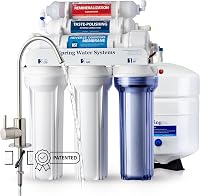
Why Does My Reverse Osmosis System Make Noise?
Most reverse osmosis noise is normal. Gurgling is wastewater draining, a short buzz is the shutoff valve or booster pump working, and rattling usually means a loose part or vibrating tube. A loud hum or a pump that won't stop points to low feed pressure or a full tank.
On this page (8 sections)
- What are the normal sounds a reverse osmosis system makes?
- Why does my reverse osmosis system gurgle so much?
- Why is my RO system buzzing or humming loudly?
- Why is my RO system making a rattling or knocking sound?
- Why does my RO system make noise when it fills or stops?
- When is noise a sign of a real problem?
- How can you make a reverse osmosis system quieter?
- Which fix should you try first?
Most reverse osmosis noise is normal. Gurgling is wastewater draining, a short buzz is the shutoff valve or booster pump doing its job, and rattling means something is loose.
A loud hum or a pump that never stops points to a fixable cause, usually low feed pressure or a tank that won't fill.
If you're wondering why your reverse osmosis system makes noise, start by listening to what kind it is. Each sound has its own cause, and most of them you can quiet in an afternoon.
What are the normal sounds a reverse osmosis system makes?
Three sounds are normal: a gurgle, a soft buzz and a quiet trickle. They come from the drain, the shutoff valve and water moving through the filters.
The gurgle is the wastewater stream. An RO membrane sends a share of the feed water to the drain to carry away concentrated minerals, and that flow makes a bubbling sound in the drain line.
It's loudest while the system is making water and when the tank refills after you draw a glass.
The buzz is the automatic shutoff valve opening and closing. When the storage tank fills to its set pressure, the valve cuts the feed water and the buzz stops.
A booster pump adds its own low hum while it runs, which is also normal.
A trickle is water passing through the filter stages. You'll hear it more on a tankless reverse osmosis system, because there's no storage tank to buffer the flow.
None of these sounds means your water is unsafe.
Why does my reverse osmosis system gurgle so much?
The gurgle is drain water, and more of it means more wastewater. A system with a clogged prefilter or a cold feed line sends extra water down the drain, so the sound gets louder and longer.
Check the drain saddle and the air gap first. A partially blocked air gap makes the water back up and gurgle loudly.
Clear any buildup in the gap and the drain line, then listen again.
Cold water is another cause. Water below about 40°F makes the membrane produce less pure water, so the system runs longer and drains more.
Let the feed line warm up or insulate it if your pipes run through a cold space.
A gurgle that never stops means the system isn't shutting off. That's a valve or tank problem, not a drain problem, and the next sections cover it.
If you also see water under the cabinet, read our guide to a reverse osmosis system leaking before you keep running it.
Why is my RO system buzzing or humming loudly?
A loud buzz is almost always a booster pump working against low inlet pressure. Pumps hum when they strain, and a strained pump is louder than one running in its normal range.
Most home RO systems want feed pressure around 40 psi or higher. When the supply sits at 30 to 40 psi, the pump runs longer to push water through the membrane, and the hum grows.
A pressure gauge on the feed line tells you which side of 40 psi you're on.
A transformer can buzz too. If the transformer sits against a cabinet wall or on a metal shelf, it can vibrate and amplify.
Move it onto a soft surface and the noise usually drops.
A valve that chatters is the third cause. Mineral buildup in the shutoff valve can make it buzz on and off instead of closing cleanly.
Soaking or replacing the valve fixes it. A pump that hums even when the tank is full points to a pressure switch set too high or a failed switch.
When does a booster pump help?
A booster pump helps when your feed pressure sits below 40 psi and the system runs slowly or makes a lot of drain water. The Aquatec 8800 kit includes the pump, a pressure switch, a transformer, four reducer fittings and instructions.
It raises input pressure from 30 to 40 psi to 60 to 80 psi depending on the system's capacity. The pressure switch senses output-line pressure and turns the pump off when the tank fills or the line shuts.
The kit works with 1/4 in or 3/8 in tubing thanks to the reducer fittings.
The damper base is the part that matters for noise: it sits between the pump and the cabinet floor and soaks up vibration. Pick this kit for a standard under-sink system up to 200 GPD that already has a working mechanical shutoff valve.
If that existing shutoff valve interferes with the pump, you need to add an ESO electric shut-off solenoid valve (24VAC, Aquatec plug), which is not included in the kit.
Who should choose the iSpring PMP5?
The iSpring PMP5 suits smaller 75 or 100 GPD systems where a full kit is more than you need. It's a single pump with 1/4 in fittings and a 24 V motor.
It raises the water pressure feeding the membrane, which speeds production and improves purity. The transformer is sold separately, and you'll need pressure switches and solenoid valves to turn the system on and off automatically.
If you already own those parts from a kit, this pump replaces the noisy one without buying the whole set.
Mount it on rubber feet or a foam pad. Most of the hum you hear comes through the cabinet floor, so isolating the pump matters more than the pump model itself.
Why is my RO system making a rattling or knocking sound?
Rattling comes from vibration, not from the water. Loose tubes, a tank resting against the cabinet and a pump without a pad are the usual sources.
Open the cabinet and touch the parts while the system runs. A tube tapping the wall, the drain line touching a pipe, or the storage tank sitting against the side panel will all rattle.
Push each one gently to find the source.
Tie tubes back with cable ties or foam wrap so they can't swing into the cabinet. Sit the tank on a foam square or rubber mat.
If the pump hums and rattles at the same time, it needs a damper base or rubber feet.
A knocking sound that follows the flow can come from water hammer in the plumbing. It usually starts when the shutoff valve closes fast.
A short length of flexible tubing between the system and the plumbing often softens it. For a system that won't sit still, check our how to install a reverse osmosis system guide for mounting tips.
Why does my RO system make noise when it fills or stops?
The fill cycle ends with a clunk as the shutoff valve closes. Water stops flowing all at once, and the pressure drop sends a thump through the tubing.
That clunk is normal on many systems. A soft clunk is fine; a hard bang that shakes the plumbing means the valve is closing too fast or the tank pressure is off.
Check the tank's pre-charge. A storage tank holds a pocket of air behind a diaphragm, and when that air pressure drifts, the tank fills and empties unevenly.
The shutoff valve then cycles more often and makes more noise.
The iSpring T32M is a 4 gallon pressurized tank with a butyl diaphragm and a 1/4 in tank valve. It comes pre-charged at 7 to 10 psi for common use and can sit vertically or horizontally.
If your tank feels heavy and waterlogged when you lift it, the diaphragm has failed and the system will cycle and buzz more often. A new tank quiets the cycle and restores steady flow.
Measure the space under the sink before you order, since this tank is 11 x 11 x 14 inches. Our reverse osmosis system installation cost guide covers what a plumber charges if you'd rather not swap it yourself.
When is noise a sign of a real problem?
Noise is a real problem when the system runs nonstop, leaks, or the water tastes off. A gurgle or buzz that never stops means water is going down the drain around the clock.
Start with the tank. If it's full and the drain still runs, the shutoff valve isn't closing.
That wastes water and wears out the filters.
A grinding or screeching pump is another warning. Pumps with worn bearings get loud before they fail, so plan a replacement rather than waiting for a leak.
Any hiss near a fitting or a puddle under the cabinet means a leak. Shut off the feed valve and fix it before running the system again.
If the drain gurgle turns into a backup in the sink, the drain line is blocked.
How can you make a reverse osmosis system quieter?
Isolate vibration and tidy the tubing. Most RO noise travels through the cabinet, so a soft pad under the system and tied-back tubes cut it more than anything else.
- Sit the system on a foam mat or rubber feet.
- Wrap loose tubes and keep them off the cabinet walls.
- Check feed pressure with a gauge and add a booster pump if it's below 40 psi.
- Set the tank pre-charge to the maker's spec and replace a waterlogged tank.
- Clear the air gap and drain line so wastewater flows freely.
None of these changes affect water quality. The goal is to stop parts from touching hard surfaces and to keep the system cycling in its normal range.
A properly mounted system with good feed pressure is quiet enough that you'll forget it's there.
Which fix should you try first?
If your reverse osmosis system makes noise, listen first, then fix the cheapest cause. A gurgle needs a clear drain line.
A loud hum needs feed pressure or a pump pad.
A rattle needs foam and cable ties.
If the pressure is low and the pump strains, the Aquatec 8800 kit is the fix for systems up to 200 GPD, because its damper base and pressure switch handle both the hum and the on/off cycle. For a 75 or 100 GPD system, the iSpring PMP5 is the smaller pump to try.
If the tank is waterlogged and the system cycles constantly, the iSpring T32M restores steady pressure.
Work through the list in order, and most systems get quiet within an hour. If the noise comes with a leak or the drain won't clear, stop and fix that first.
Our guide to a tankless reverse osmosis system covers how those units sound without a storage tank.
Frequently asked questions
Why does my RO system gurgle?
The gurgle is wastewater flowing to the drain as the system flushes impurities. It's most noticeable while the system is making water and when the tank refills after you use some.
A steady trickle is fine; a constant loud rush means the system isn't shutting off.
Why is my RO system buzzing loudly?
A loud buzz usually comes from a booster pump straining against low feed pressure or from a transformer or valve vibrating against a cabinet. Check the inlet pressure first.
If it sits below 40 psi, the pump works harder and gets noisier, and adding pressure fixes it.
Can I make my reverse osmosis system quieter?
Yes. Seat the system on rubber feet or a foam pad, tie loose tubes away from the cabinet walls, and keep the drain line from touching pipes.
A booster pump with a damper base, like the Aquatec kit, also cuts pump hum.
None of these changes affect water quality.