5 Best Reverse Osmosis System for Well Water (October 2026)
The best reverse osmosis systems for well water include the iSpring RCC7AK-BN for certification-focused buyers, the iSpring RCC7P-AK for low-pressure kitchens, and the APEC RO-PH90 for alkaline water fans.
On this page (11 sections)
- How we chose reverse osmosis systems for well water
- Compare the best RO systems for well water
- Best reverse osmosis systems for well water
- What should you check before buying an RO system for a well?
- Does well water need a whole-house filter before RO?
- How much RO output does your household need?
- Should you choose remineralization or a pump first?
- How should you plan an under-sink RO installation?
- How do you care for an RO system on well water?
- Which mistakes should well owners avoid?
- Which reverse osmosis system should you choose for well water?
The iSpring RCC7AK-BN is our top pick for the best reverse osmosis system for well water with suitable feed water and pressure. Choose iSpring RCC7P-AK when you need an electric booster pump, or APEC RO-PERM for non-electric pump assistance.
Start with a current well-water report and pressure measurements. Those tell you whether an under-sink system can connect to your supply directly or needs treatment upstream.
These picks supply drinking and cooking water at the kitchen. For more options beyond well-water needs, see our under-sink reverse osmosis systems guide.
Our picks at a glance
-
1
-
2

-
3

How we chose reverse osmosis systems for well water
We put feed-water suitability and pressure needs first, followed by certification, useful output and upkeep. A higher stage count earns little value if the system cannot work well with your supply.
We compared the systems' pump designs, mineral stages, installation features and supported water conditions. The scores stay consistent across PleasantlySimple guides, while the recommendations here focus on well owners.
Certification matters, but its scope matters too. A system certified to a standard should still be matched to the specific contaminant reductions you need, rather than treated as protection against everything found in groundwater.
A kitchen RO system also has a clear boundary: it treats water sent to its outlet. It does not solve staining in bathrooms, scale throughout the house or a well that needs repair.
Compare the best RO systems for well water
Choose by pressure support, mineral preference and demand after checking feed-water limits. The comparison below helps separate those choices without making membrane output the only deciding factor.
GPD means gallons per day under rated conditions. It describes production over time, not the amount that pours from the faucet each minute.
| Product | Best for | Stages | Rated output | Mineral stage | Our score |
|---|---|---|---|---|---|
| iSpring RCC7AK-BN | certification-focused buyers | 6 | 75 GPD | Alkaline remineralization | 9.3 |
| iSpring RCC7P-AK | low-pressure kitchens | 6 | 75 GPD | Alkaline remineralization | 8.2 |
| APEC RO-PH90 | alkaline water fans | 6 | 90 GPD | Calcium carbonate | 7.0 |
| iSpring RCC2AK | busy family kitchens | 6 | 200 GPD | Alkaline remineralization | 7.0 |
| APEC RO-PERM | kitchens without outlets | 5 | Confirm with APEC | None | 6.5 |
Best reverse osmosis systems for well water
The RCC7AK-BN leads for suitable supplies, while the other models serve more specific needs. Choose a pump-equipped model for a pressure problem and a higher-output model for demand only after confirming water compatibility.
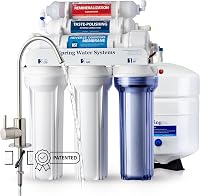
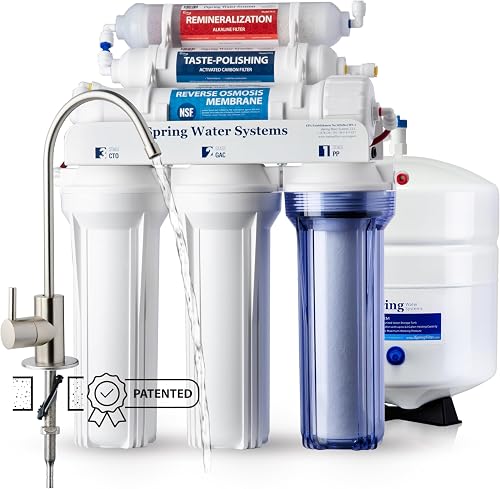
iSpring RCC7AK-BN: our top reverse osmosis pick for well water
iSpring RCC7AK-BN: Best for certification-focused buyers
- NSF/ANSI 58 certified system
- 6-stage filtration with alkaline remineralization
- 75 GPD
- Transparent first-stage housing
Our first choice for suitable well water when whole-system certification matters most. The top-mounted faucet fastener also helps with installation in an awkward sink cabinet.
Pros
- Whole-system NSF/ANSI 58 certification
- Faucet fastens from above the sink
- Visible sediment buildup in first-stage housing
Cons
- No booster pump included
- Feed water may need pretreatment
Choose the RCC7AK-BN if you want whole-system NSF/ANSI 58 certification and your well already supplies suitable water at adequate pressure. iSpring certifies the complete system, which makes this a useful starting point for buyers who prioritize documented filtration performance.
The alkaline stage adds minerals after RO treatment. That suits households that prefer remineralized water for drinking, though mineral addition is a taste choice rather than a reason to overlook contaminants.
Its transparent first-stage housing helps you spot sediment buildup. Use that view as an early warning, alongside the replacement schedule, because a filter can need attention without looking heavily discolored.
The faucet fastens from above the sink, reducing the awkward reach behind the basin during that part of installation. Quick-fitting connections and color-coordinated tubing also help keep the plumbing work organized.
Skip this model if low feed pressure remains unresolved. Its lack of an included booster pump makes the RCC7P-AK a more direct choice for that situation.
For suitable supplies, the combination of certification, visible sediment monitoring and easier faucet fastening earns its place first. Our iSpring RCC7AK-BN review covers the system in more detail.
iSpring RCC7P-AK: electric pump support for low pressure
iSpring RCC7P-AK: Best for low-pressure kitchens
- Electric booster pump
- 6-stage filtration with alkaline remineralization
- 100-240V pump power adapter
- Supports water TDS up to 2,000 ppm
Choose this pump-assisted system when low feed pressure is the main obstacle and an electrical connection is available. Its mineral stage suits households that prefer remineralized drinking water.
Pros
- Electric booster pump supports low-pressure operation
- Alkaline remineralization
- Transparent first-stage housing
Cons
- Requires electrical power for pump assistance
- Pump does not replace well water pretreatment
Choose the RCC7P-AK when low incoming pressure is the main obstacle and you have an appropriate electrical connection. Its electric booster pump raises pressure feeding the RO process, which helps address a problem that extra filter stages cannot solve.
The system supports feed-water TDS up to 2,000 ppm. That limit is a compatibility check, not permission to ignore iron, hardness, bacteria or individual dissolved contaminants.
Its alkaline finishing stage suits buyers who want minerals added after RO treatment. The clear first-stage housing also gives you a visible check on sediment loading between service dates.
Plan the electrical connection before ordering. Keep the adapter and connections protected from leaks, and have an electrician address any unsuitable outlet arrangement.
Skip this model if you cannot provide power or if your existing pressure already meets the needs of a simpler system. A pump adds a component to maintain, so buy it to solve a measured problem.
Our guide to whether you need a reverse osmosis booster pump explains pressure support in more detail.
APEC RO-PH90: for a calcium carbonate finishing stage
APEC RO-PH90: Best for alkaline water fans
- 6-stage filtration
- 90 GPD
- Calcium carbonate pH stage
- Supports water TDS up to 2,000 ppm
A water-pressure-powered choice for households that want a calcium carbonate finishing stage. Buy it for that water preference after confirming suitable feed pressure.
Pros
- Calcium carbonate stage raises pH
- US-made filters
- APEC states WQA certification
Cons
- No booster pump included
- Mineral stage does not treat whole-house acidity
Choose the RO-PH90 if you prefer calcium carbonate remineralization and your well supplies adequate pressure. Its final mineral treatment raises pH after the membrane, giving it a clear role for buyers who want that style of finished water.
The system has a 90 GPD rating and runs on water pressure. It is a candidate for routine kitchen drinking and cooking demand without adding an electric pump.
APEC uses US-made filters and states WQA certification. Match the relevant certified reductions to your water report, especially when a particular dissolved contaminant is driving the decision.
Its metal faucet and quick-connect fittings are useful installation details, but leave access around the filter housings for later service. A tidy installation still needs room to open housings and handle drips.
Skip this model if low pressure is your main concern, or if you do not want a mineral stage. Also, do not use its pH feature as a substitute for treating acidic well water that affects household plumbing.
iSpring RCC2AK: for higher kitchen water demand
iSpring RCC2AK: Best for busy family kitchens

- 200 GPD membrane
- 6-stage filtration with alkaline remineralization
- Top-mounted faucet fastener
- Transparent first-stage housing
The higher-output option for households that fill several bottles and use RO water for cooking. Its maximum supported feed-water TDS is 500 ppm, so check that limit before choosing.
Pros
- Higher membrane output for greater demand
- Faucet fastens from above
- Alkaline remineralization
Cons
- Maximum supported TDS is 500 ppm
- Rated output depends on feed conditions
Choose the RCC2AK for frequent bottle filling and cooking use when the feed water fits its limits. Its 200 GPD membrane makes it the higher-output option in this group.
The crucial restriction is its 500 ppm maximum supported TDS. Check water at the intended RO feed point, particularly if you already have equipment that changes the water before it reaches the kitchen.
Its alkaline stage adds minerals after filtration. The top-mounted faucet fastener helps with faucet installation, while the transparent first housing lets you monitor visible sediment buildup.
Higher production can help a household that draws water repeatedly through the day. It does not mean unlimited instant flow, and cold feed water or inadequate pressure can reduce production.
Skip this model if feed-water TDS exceeds its limit. A higher membrane rating cannot compensate for unsuitable water, and this is not the first choice for an unresolved pressure problem.
Buy it for actual household demand, such as several reusable bottles plus meal preparation. Occasional glass filling alone gives you less reason to prioritize the larger membrane.
APEC RO-PERM: pump assistance without an outlet
APEC RO-PERM: Best for kitchens without outlets

- 5-stage filtration
- Non-electric permeate pump
- Designed for 30–50 psi supplies
- No remineralization stage
A practical choice for suitable low-pressure supplies when you want pump assistance without an electrical connection. Its permeate pump uses hydraulic energy to help the storage tank fill.
Pros
- Pump needs no electricity
- Designed for low-pressure supplies
- APEC claims faster tank filling and less wastewater
Cons
- Permeate pump does not raise incoming feed pressure
- No remineralization stage
Choose the RO-PERM if you want non-electric pump assistance for a suitable low-pressure supply. APEC designed it for areas with 30–50 psi pressure, including some well-water homes.
Its permeate pump uses hydraulic energy rather than an electrical connection. It helps separate storage-tank backpressure from membrane production; it does not boost the pressure coming into the house.
APEC says the design can fill the tank 2–3 times faster and reduce wastewater by up to 80% compared with standard systems. Actual results depend on the supply and operating conditions, so use those claims to understand the pump's purpose rather than predict exact savings.
This is a 5-stage system without remineralization. That suits buyers who prefer RO water without an added mineral finishing stage.
Skip it if you specifically need an electric feed-pressure boost or want an included alkaline stage. For storage and delivery questions, our guide to normal RO tank pressure explains how the tank affects faucet flow.
What should you check before buying an RO system for a well?
Get a water-quality report, pressure readings and cabinet measurements before choosing. These checks prevent the most costly mismatch: buying a kitchen system before understanding the supply.
Start with contaminants, not a TDS meter
Use a certified laboratory and ask your local health department which analyses suit your area. Common concerns include bacteria, nitrate, arsenic, iron, manganese, hardness and pH, but the right panel depends on local conditions.
Compare each result with the treatment capabilities and feed-water limits of the system you are considering. Pay attention to contaminant form where relevant, since treatment performance can depend on water chemistry.
A handheld TDS meter helps track dissolved material, but it cannot tell you which substances are present. Clear water and a low reading do not establish that the water is safe to drink.
Measure pressure through the well pump cycle
Check pressure at the planned connection while the well pump cycles and while other fixtures run. A single high reading can hide the lower pressure available before the pump starts again.
Compare the lowest normal pressure with the manufacturer's operating requirements. If household pressure is erratic or water delivery is poor throughout the home, investigate the well system before adding kitchen equipment.
Measure the space needed for service
Allow space for the filter assembly, any storage tank, tubing and access to shutoff valves. Leave enough clearance to remove housings rather than using only the assembled dimensions.
Check the faucet opening, drain connection and any power needs too. Cabinet storage that pushes against tubing can create kinks or strain fittings, so reserve a clear area for the installation.
Does well water need a whole-house filter before RO?
Some wells need pretreatment, but the treatment should address a measured problem. One general-purpose filter cannot handle every combination of sediment, dissolved minerals and microbes.
Sediment filters catch particles that would otherwise load the RO prefilters. Heavy or recurring sediment may also call for an inspection of the well and plumbing rather than ever-finer cartridges alone.
Iron and manganese can stain fixtures and foul equipment. Dissolved forms may need treatment beyond a simple sediment cartridge, with the approach chosen for their levels and the water's chemistry.
Hardness can cause scale on an RO membrane. A softener may help protect downstream equipment where appropriate, but it does not disinfect water or remove every contaminant.
Microbial contamination needs a separate treatment plan and attention to its source. Do not assume any of these under-sink systems serves as the sole disinfection barrier for an unsafe well.
Arrange equipment in the order recommended by the treatment suppliers. The RO system's feed-water limits apply to the water entering it, after any upstream treatment.
How much RO output does your household need?
Choose enough production for your busiest normal day, including drinking, cooking and any connected ice use. Count the times you need several containers filled close together, not just the number of people at home.
A household filling bottles before school may empty stored water faster than one drawing small amounts throughout the day. Recovery time matters most after that stored supply has been used.
Rated output assumes particular feed conditions. Colder water and lower pressure generally slow membrane production, so leave a margin rather than matching your estimated use exactly.
Storage-tank size also differs from usable water volume. The air charge and operating pressure affect how much water the tank holds and how strongly it delivers water.
Avoid choosing on stage count alone. A mineral stage changes the finished water, while a pump changes operating conditions; neither automatically means greater contaminant coverage.
Should you choose remineralization or a pump first?
Choose pressure support first when pressure is inadequate, then decide whether you want added minerals. Reliable operation matters more than a preferred taste finish.
An electric booster pump raises pressure supplied to the membrane. A permeate pump uses water energy to reduce the effect of tank backpressure, so the two designs address pressure in different ways.
Remineralization serves another purpose: it adds minerals after RO treatment and can change taste and pH. It does not protect upstream pipes from acidic well water or replace treatment for contaminants.
The mineral stage can also raise the finished water's TDS reading. Keep that in mind when monitoring performance, and follow the manufacturer's guidance on where to take measurements.
How should you plan an under-sink RO installation?
Plan accessible connections and safe service space before assembling the system. Our RO installation guide walks through the wider process.
Confirm the cold-water feed fitting and keep its shutoff reachable. Do not connect to hot water, and route tubing away from heat, sharp edges and places where stored items can crush it.
Check the sink material before making a faucet hole. Stone, porcelain and other surfaces may need specialist tools or a professional installer to avoid damage.
Follow the instructions for the drain connection, including its position and any local air-gap requirements. A poorly placed drain connection can cause noise, poor drainage or contamination risks.
Flush and sanitize the system as instructed before drinking from it. Discard the required initial water rather than assuming the first clear glass is ready.
Inspect every connection during operation and again after the system has filled. An accessible shutoff and a leak alarm help you respond quickly if water appears inside the cabinet.
How do you care for an RO system on well water?
Use a written service schedule plus changes in performance to guide care. Well-water conditions can load filters faster than a simple calendar suggests.
Keep a record of installation, cartridge changes, membrane service and unusual pressure or taste changes. Our guide to how long RO filters last explains why different parts have different service needs.
Check upstream treatment as part of the same routine. A clogged sediment filter or neglected softener can affect the RO system even when its own cartridges are new.
A clear housing helps reveal visible buildup, but appearance is only one clue. Reduced production, falling delivery pressure or a new taste deserves investigation before the next scheduled service.
Wash your hands and keep replacement parts clean during maintenance. Follow the manufacturer's sanitation procedure, use compatible cartridges and avoid overtightening housings.
Continue periodic well-water analysis, especially after flooding, well repairs or sudden changes in smell, color or taste. Good RO performance does not remove the need to monitor the source.
Which mistakes should well owners avoid?
Avoid buying before measuring the supply or expecting under-sink RO to solve whole-house problems. Most poor choices start with one of those assumptions.
- Choosing by TDS alone: Use it alongside a laboratory report, since it cannot identify bacteria or individual chemicals.
- Ignoring pressure swings: Match the system to the lower part of the normal pump cycle, not just peak pressure.
- Treating an output rating as faucet flow: Membrane production and immediate delivery are different measures.
- Skipping pretreatment: Resolve sediment, scaling and fouling concerns before they shorten service intervals.
- Adding tank air by guesswork: Diagnose the problem and follow the specified procedure before changing the air charge.
- Assuming more stages mean safer water: Look for relevant treatment performance rather than the largest stage count.
- Changing several things at once: Record readings and symptoms so you can identify what actually solved a problem.
If faucet flow drops, first check whether the tank has had time to refill and whether feed valves are open. Then work through filters, supply pressure and tank condition in an orderly way.
Which reverse osmosis system should you choose for well water?
The best reverse osmosis system for well water matches your measured supply before it matches a preferred brand. Make the final choice with your water report, lowest normal pressure and kitchen layout in front of you.
Choose iSpring RCC7AK-BN for suitable supplies when whole-system certification is your main priority. Choose RCC7P-AK when incoming pressure needs an electric boost and power is available.
Choose APEC RO-PERM for suitable low-pressure installations where you want non-electric pump assistance. Pick APEC RO-PH90 for its calcium carbonate finish, or iSpring RCC2AK for greater demand within its feed-water limits.
Resolve any pretreatment gap before ordering. Our guide to choosing a kitchen RO system helps turn those measurements into a final checklist, and the under-sink RO comparison helps compare system styles.
Our top 3 picks at a glance
-
1
-
2
-
3
Frequently asked questions
Should I have well water analyzed before installing reverse osmosis?
Yes. Get a current laboratory report before choosing an RO system, then match its treatment capabilities and feed-water limits to your results.
Ask your local health department or a certified lab which contaminants to include. Measure pressure separately because a water-quality report does not show the pressure available at your sink.
Can reverse osmosis work with low well pressure?
Yes, with a suitable system and enough incoming pressure for its operating range. An electric booster pump raises feed pressure, while a permeate pump helps reduce the storage tank's backpressure on production.
Measure pressure through the well pump's cycle, then choose the type of assistance your installation actually needs.
Does well water need pretreatment before reverse osmosis?
Some wells do. Sediment, iron, manganese and hardness can foul filters or cause membrane scale, while microbial concerns need a suitable treatment plan.
Use your laboratory report to choose pretreatment rather than adding equipment by guesswork. An under-sink RO unit serves a drinking-water outlet and does not protect every tap.
Which reverse osmosis system is best for well water?
The iSpring RCC7AK-BN is our top pick for suitable feed water and pressure, especially when whole-system NSF/ANSI 58 certification is a priority. Choose RCC7P-AK when you need an electric booster pump, or consider APEC RO-PERM for non-electric pump assistance.
Resolve pretreatment needs before choosing among them.
Does a low TDS reading mean well water is safe?
No. TDS measures dissolved material as a group and cannot identify specific contaminants or rule out bacteria.
A low reading is useful for tracking changes, but it does not replace laboratory analysis. Remineralization can also raise the final reading, so compare measurements at consistent points in the treatment system.