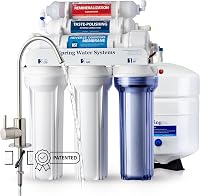
6 Best APEC Reverse Osmosis Systems (October 2026)
The best APEC reverse osmosis systems include the APEC ROES-50 for everyday kitchens, the APEC ROES-PH75 for mineral water fans, and the APEC RO-90 for busy cooking households.
On this page (8 sections)
- How we chose the best APEC water systems
- The best APEC reverse osmosis systems
- Which APEC system fits your kitchen?
- What should you check before installing an APEC system?
- How do you care for an APEC reverse osmosis system?
- Which mistakes should APEC buyers avoid?
- Frequently asked questions
- Which APEC water system should you pick?
The APEC ROES-50 is our pick among APEC water systems for most kitchens because it covers routine drinking and cooking needs without adding a mineral cartridge. Choose a different model when you have a clear reason: heavier demand, added calcium, spare filters or less drain water.
All six systems here sit under the sink and use a storage tank. Your best choice depends on how you draw water throughout the day, the water entering your home and the space available for installation and service.
If you're comparing brands, see our iSpring vs APEC comparison. For alternatives outside this brand, start with our best under-sink reverse osmosis systems.
Our picks at a glance
-
1

-
2

-
3

How we chose the best APEC water systems
The ROES-50 ranks first for general kitchen use, while the other picks solve more specific needs. We compared production capacity, mineral stages, included parts, service needs and drain-water features.
A higher score reflects a stronger fit for the broad search, not a reason to ignore your own priorities. A household focused on mineral addition or pitcher filling may have a better match farther down the list.
Don't choose by stage count alone. An added mineral stage changes the water after RO, so it serves a different purpose from the membrane and pre-filters.
| Product | Best for | Capacity | Stages | Mineral stage | Our score |
|---|---|---|---|---|---|
| APEC ROES-50 | everyday kitchens | 50 GPD | 5 | None | 9.0 |
| APEC ROES-PH75 | mineral water fans | 75 GPD | 6 | Calcium for pH enhancement | 8.6 |
| APEC RO-90 | busy cooking households | 90 GPD | 5 | None | 7.9 |
| APEC ROES-50X | maintenance planners | 50 GPD | 5 | None | 7.2 |
| APEC RO-PH90 | busy mineral-water households | 90 GPD | 6 | Calcium carbonate for pH enhancement | 7.0 |
| APEC ROES-100 | frequent pitcher filling | 100 GPD | 5 | None | 6.6 |
The best APEC reverse osmosis systems
Choose the ROES-50 as your starting point, then move to another model only for a feature you'll use. The notes below explain who benefits from each option and who should skip it.
APEC ROES-50: Best for everyday kitchens
- 50 GPD capacity
- Five-stage filtration
- Tank and brushed nickel faucet included
- Colored tubing and quick connection fittings
Choose the ROES-50 for routine kitchen drinking and cooking water without added minerals. Its included tank, faucet and installation kit cover the main parts of an under-sink setup.
Pros
- Tank and faucet included
- Colored tubing helps identify connections
- Quick connection fittings simplify service
Cons
- Separate tank needs cabinet space
- Less daily output than the higher-capacity picks
The APEC ROES-50 suits a kitchen where filtered water goes into glasses, coffee, tea and everyday cooking. Its five-stage system has a rated production capacity of 50 GPD, with no calcium stage added after RO.
The kit includes a tank, brushed nickel faucet, filter set and installation parts. Colored tubing helps you follow the water paths, while quick connection fittings reduce the number of threaded joints involved in setup.
Choose it when you want a straightforward tank system and can spread larger water draws through the day. Its appeal is the complete basic setup, rather than a feature you may never need.
Skip it if you specifically want mineral addition or regularly drain the tank with back-to-back fills. Higher production can help with recovery, although it won't turn a storage system into an endless supply at the faucet.
Plan the plumbing before opening the kit. Our guide to installing an under-sink water filter explains the cabinet and connection work to consider.
APEC ROES-PH75: Best for mineral water fans
- 75 GPD capacity
- Six-stage filtration
- Calcium mineral stage
- Tank, faucet and tubing included
The ROES-PH75 suits buyers who prefer calcium added after reverse osmosis. Choose it for that water preference rather than assuming an extra stage is necessary for every kitchen.
Pros
- Adds calcium after RO
- Includes tank and faucet
- More daily output than the ROES-50
Cons
- Mineral cartridge adds a maintenance item
- Unnecessary if you don't want added minerals
The APEC ROES-PH75 is the better fit if you want calcium added after reverse osmosis. Its sixth stage provides that mineral addition, and its rated production is 75 GPD.
Choose this model because you prefer that water profile, not because more stages automatically mean better filtration. APEC uses the calcium cartridge for pH enhancement, which is a separate choice from reducing unwanted substances.
The included tank, faucet, tubing, drain saddle, feed adapter and wrenches cover the main installation parts. You'll still need a suitable faucet location and plumbing connections that fit your kitchen.
Skip it if you prefer water without added minerals or want fewer cartridges to maintain. The mineral stage is another service item, so include it in your replacement plan rather than remembering only the main filter housings.
It also isn't a way to guarantee a particular final pH in every home. Read our guide to reverse osmosis remineralization before making mineral addition your deciding feature.
APEC RO-90: Best for busy cooking households
- 90 GPD capacity
- Five-stage filtration
- Large-capacity filters
- JG quick-connect fittings
Choose the RO-90 when repeated drinking and cooking draws make refill capacity a priority. It keeps a five-stage layout without adding a mineral cartridge.
Pros
- Higher daily production
- Large-capacity filters
- Tank and faucet included
Cons
- No mineral stage for buyers who want one
- Higher output doesn't replace adequate tank storage
The APEC RO-90 suits households that use RO water for both drinking and frequent cooking. Its 90 GPD rating gives it more production capacity while keeping a five-stage layout without mineral addition.
Think about your busiest day rather than household size alone. Several people filling bottles before work, followed by a large cooking draw, create a different demand pattern from occasional glasses spread across an afternoon.
APEC equips this model with large-capacity filters and JG quick-connect fittings. Those features make it worth considering if filter service and a conventional tank setup suit your preferences.
Choose it for recovery between repeated draws, but skip it if modest daily use gives the basic model plenty of time to refill. A higher production rating doesn't mean the same increase in faucet speed.
It also won't solve a cabinet that lacks space for a separate tank. If you're still deciding whether this type of filtration fits your needs, read whether a reverse osmosis system is worth it.
APEC ROES-50X: Best for maintenance planners

- 50 GPD capacity
- Five-stage filtration
- Extra pre-filter set for stages 1–3
- Tank and brushed nickel faucet included
The ROES-50X suits buyers who want spare pre-filters ready for future service. Its extra set is a maintenance benefit, not an increase in daily output.
Pros
- Extra pre-filter set included
- Colored tubing and quick connections
- Tank and faucet included
Cons
- No output increase over the ROES-50
- Extra set doesn't replace every filter in the system
The APEC ROES-50X suits buyers who like to have maintenance supplies ready before they're needed. Its useful difference is an extra pre-filter set for stages 1–3.
It shares the basic ROES-50's five-stage arrangement and 50 GPD rating. Choose the X package for the spare filters, not for faster production or an added treatment stage.
The extra set doesn't replace every filter in the system. You'll still need to track the membrane and any other replacement parts according to their own service instructions.
This package makes sense if you have a dry storage spot and will keep the spare set sealed until use. Label the box with the model and stages so it doesn't become an unidentified filter pack at the back of a cabinet.
Skip it if you prefer ordering supplies when service is due. Having spares nearby is useful only if you also keep a schedule and know which components need changing.
APEC RO-PH90: Best for busy mineral-water households

- 90 GPD capacity
- Six-stage filtration
- Calcium carbonate stage
- Metal, lead-free faucet
The RO-PH90 combines higher daily output with calcium carbonate addition. It fits households that want both features and have room for the wider filter unit.
Pros
- Higher output with mineral addition
- Metal, lead-free faucet
- JG quick-connect fittings
Cons
- Wider filter unit than the other picks
- Mineral cartridge adds a maintenance item
The APEC RO-PH90 suits households that want mineral addition alongside heavier daily production. It combines a 90 GPD rating with a sixth stage using calcium carbonate, which APEC says raises water pH.
Choose it when both features matter. If you only want added calcium and your draws are modest, the ROES-PH75 is the other mineral-stage option to consider.
Cabinet fit deserves extra attention here: the filter unit measures 15 x 7 x 18 in, before allowing for the separate tank and service access. Its wider unit may be awkward beside a disposal or crowded drain plumbing.
The included metal, lead-free faucet and JG tubing are useful parts of the setup. They don't remove the need to plan the faucet hole, tubing route and room to reach each connection.
Skip this model if the mineral stage serves no clear preference or makes cabinet access harder. Our APEC ROES-50 review covers the simpler alternative without that extra cartridge.
APEC ROES-100: Best for frequent pitcher filling

- 100 GPD capacity
- 1:1 drain water ratio
- 3/8 in fast-flow output
- Tank and faucet included
Consider the ROES-100 when drain water and filling pitchers matter most. APEC specifies a 1:1 drain ratio and designs its larger output connection for quicker dispensing from the tank.
Pros
- Highest daily capacity here
- Specified 1:1 drain ratio
- Larger tank-to-faucet output connection
Cons
- No added mineral stage
- Still needs room for a storage tank
The APEC ROES-100 suits buyers who often fill pitchers or cooking pots and care about drain water. It has a rated production capacity of 100 GPD, and APEC specifies a 1:1 drain water ratio.
That ratio means one part drain water for each part purified water under the conditions used for the rating. It doesn't mean the system produces no drain water.
Its 3/8 in output connection is designed to move stored water to the faucet more quickly. APEC separates that dispensing feature from daily production, which is useful because the two affect different parts of daily use.
Choose it when those features address a real concern in your kitchen. Skip it if you want added minerals or rarely make large draws and have no strong drain-water priority.
Confirm the exact installation and power requirements before planning the cabinet. The important comparison is the complete setup you'll live with, including its tank, connections and service access.
Which APEC system fits your kitchen?
Choose by water needs, draw pattern and cabinet fit, then decide whether you want minerals added. Buying the highest-output model first can leave the more important installation questions unanswered.
Start with the water entering your home
Identify what you want to reduce before choosing an RO system. A taste complaint, a known contaminant concern and untreated well water call for different levels of planning.
For municipal water, review your utility's water report and consider any concerns tied to your home's plumbing. For well water, use a current laboratory water analysis to guide treatment choices.
Don't assume a kitchen RO unit replaces sediment treatment, softening or disinfection when those are needed. Match any specific contaminant concern to the exact model's certified reduction claims and feed-water limits.
Match production to your draw pattern
Daily production and ready-to-pour water are different. GPD describes production over a day under rated conditions, while the tank supplies water when you open the faucet.
Actual production depends on factors such as feed pressure, temperature and incoming dissolved solids. A cold-water supply or low pressure can lengthen recovery.
Estimate your RO use by counting drinking water, bottles, beverages and cooking water over a normal day. Then identify the largest cluster of draws, such as breakfast bottles followed by filling a stockpot.
A small household with concentrated demand may care more about recovery than a larger household that spaces out its use. Don't treat a daily rating as the amount available immediately.
Which APEC water systems add calcium minerals?
The ROES-PH75 and RO-PH90 add calcium after RO. Choose between them based on demand and cabinet fit once you've decided that you want mineral addition.
This is mainly a water-preference decision. An alkaline label doesn't establish a health benefit, and an added mineral stage doesn't make all other treatment choices unnecessary.
If you're unsure which features deserve priority, our guide to choosing a reverse osmosis system walks through the wider decision.
Measure for service, not just installation
Allow space for the filter unit, tank and filter changes. A system that fits tightly on day one can become difficult to maintain.
Measure around the disposal, drain trap, hinges and existing shutoff valves. Check the cabinet opening too, since a tank must pass through it before reaching its final position.
Leave room to lower filter housings and reach tubing connections without pulling hard on the lines. Keep shutoffs accessible so you can stop the water quickly during service.
If storage space is already scarce, compare tankless vs tank reverse osmosis before committing. Our guide to under-sink water filters and RO systems also explains the broader choices.
What should you check before installing an APEC system?
Check feed pressure, faucet placement and plumbing access before starting. Having the right kit doesn't guarantee that every kitchen is ready for the same connections.
Confirm pressure and feed-water requirements
The ROES-50, ROES-PH75, RO-90 and ROES-50X specify a 40–85 psi operating range. Check the exact instructions for your chosen model, including water-quality and temperature limits.
Low pressure can slow production, so don't buy a higher GPD rating as a substitute for correcting the supply issue. Our guide to reverse osmosis booster pumps explains when pressure support may help.
Plan the faucet and drain connections
Decide where the dedicated faucet will go before mounting anything. A spare sink hole may work, while drilling a new hole can require tools and skills suited to the sink or countertop material.
Use the cold-water supply and follow the model's drain-connection instructions. Keep tubing clear of sharp edges, moving cabinet hardware and anything that could pinch it.
Renters should get permission for permanent plumbing or countertop changes. If the required work is outside your skills, arrange installation rather than forcing an unsuitable connection.
Follow the startup sequence
Install, flush and fill the system in the order APEC gives for that model. Don't assume the first water produced is ready to drink before the required startup steps are complete.
Seat tubing fully in each fitting and avoid tight bends. Check every connection with dry tissue when the system first fills, then inspect again after it has been under pressure.
Keep the manual and shutoff location easy to find. Put the installation date in your service log while the details are fresh.
How do you care for an APEC reverse osmosis system?
Keep a filter-by-filter service log and follow the model's instructions for replacement, flushing and sanitation. A single reminder for the whole system can overlook stages with different schedules.
APEC recommends a 6–24 month replacement range for ROES-50 filters, depending on incoming water quality. Use that range with the instructions for each component, not as permission to leave every filter unchanged for 2 years.
Write down each replacement date, part number and any required flushing steps. This is especially useful when pre-filters, the membrane and a mineral cartridge are due at different times.
Before service, shut off and depressurize the system as directed. Keep open fittings and replacement filters clean, and use the approved sanitation process rather than adding household cleaners on your own.
Watch for changes in refill time, available stored water or taste. These can signal a need to check the system, but they don't identify the cause by themselves.
A dissolved-solids meter can help track changes in RO performance when used as directed. It doesn't tell you whether every possible contaminant is absent, and a mineral stage can raise the final reading.
Keep the cabinet floor dry and inspect connections during routine cleaning. Catching a small drip early is easier than discovering it behind stored cleaning bottles.
Which mistakes should APEC buyers avoid?
Avoid buying by the largest number alone. Output, stage count and tank size describe different things, so each needs a separate place in your decision.
- Assuming more stages always mean cleaner water: A mineral stage adds something back after RO; choose it because you want that feature.
- Confusing tank size with usable storage: A pressure tank contains an air cushion, so its stated size isn't all available drinking water.
- Ignoring recovery time: Several large draws close together can empty stored water even when total daily use seems modest.
- Expecting RO to work without drain water: The membrane sends concentrated dissolved material to the drain as part of normal operation.
- Putting every filter on one schedule: Different stages have different jobs and service needs.
- Treating spare pre-filters as a full replacement kit: The ROES-50X's extra set covers specific stages, not every component.
- Packing the cabinet after installation: Keep space around shutoffs and connections so routine checks remain easy.
Don't change tank pressure to chase a faster stream without following the correct procedure. First check whether the tank is full, the supply is open and the system has had time to recover.
Frequently asked questions
The main questions about these APEC water systems concern model choice, tanks and upkeep. Use these answers to settle the final details after checking your water supply and cabinet.
Which APEC reverse osmosis system is best for most homes?
The APEC ROES-50 is our general pick for kitchen drinking and cooking water when you don't want added minerals. Its tank, faucet and installation kit make it a clear starting point.
Move to another model for a specific need, such as mineral addition, heavier daily demand or a drain-ratio priority.
What is the difference between the APEC ROES-50 and ROES-PH75?
The ROES-PH75 adds a calcium mineral stage and offers more daily production than the ROES-50. Choose it if you prefer water with minerals added after RO.
The ROES-50 suits buyers who want the simpler five-stage arrangement and don't have a reason to add a mineral cartridge.
Do APEC reverse osmosis systems include a storage tank?
All six systems in this guide include a storage tank. Measure for the tank and filter unit separately, leaving access to valves and filter housings.
A tank's outside size doesn't tell you how much water it can dispense; our guide to installing a reverse osmosis system explains setup planning.
How often do APEC RO filters need replacement?
APEC gives a 6–24 month replacement range for ROES-50 filters, depending on incoming water quality. Follow the instructions for each filter rather than applying one date to every stage.
Keep a service log and read how long reverse osmosis filters last to plan future changes.
Should I choose an APEC system with a mineral stage?
Choose a mineral-stage model if you want calcium added after reverse osmosis and prefer that water profile. The ROES-PH75 and RO-PH90 serve that preference.
Mineral addition isn't a reason to expect health benefits; compare the best reverse osmosis systems with remineralization if this feature drives your choice.
Which APEC water system should you pick?
Choose the ROES-50 if you want everyday kitchen RO without added minerals, or the ROES-50X if having spare pre-filters ready fits your maintenance habits. Choose the RO-90 when repeated draws make higher production useful without a mineral stage.
For added calcium, choose the ROES-PH75 for routine use or the RO-PH90 when heavier demand justifies it. Put the ROES-100 first on your shortlist when drain water and frequent pitcher filling matter most.
Before ordering any of these APEC water systems, confirm feed-water suitability, installation access and room for future filter changes. For a closer look at the starting choice, read our APEC ROES-50 review.
Our top 3 picks at a glance
-
1
-
2
-
3
Frequently asked questions
Which APEC reverse osmosis system is best for most homes?
The APEC ROES-50 is our general pick for kitchen drinking and cooking water when you don't want added minerals. Its tank, faucet and installation kit make it a clear starting point.
Move to another model for a specific need, such as mineral addition, heavier daily demand or a drain-ratio priority.
What is the difference between the APEC ROES-50 and ROES-PH75?
The ROES-PH75 adds a calcium mineral stage and offers more daily production than the ROES-50. Choose it if you prefer water with minerals added after RO.
The ROES-50 suits buyers who want the simpler five-stage arrangement and don't have a reason to add a mineral cartridge.
Do APEC reverse osmosis systems include a storage tank?
All six systems in this guide include a storage tank. Measure for the tank and filter unit separately, leaving access to valves and filter housings.
A tank's outside size doesn't tell you how much water it can dispense; our guide to installing a reverse osmosis system explains setup planning.
How often do APEC RO filters need replacement?
APEC gives a 6–24 month replacement range for ROES-50 filters, depending on incoming water quality. Follow the instructions for each filter rather than applying one date to every stage.
Keep a service log and read how long reverse osmosis filters last to plan future changes.
Should I choose an APEC system with a mineral stage?
Choose a mineral-stage model if you want calcium added after reverse osmosis and prefer that water profile. The ROES-PH75 and RO-PH90 serve that preference.
Mineral addition isn't a reason to expect health benefits; compare the best reverse osmosis systems with remineralization if this feature drives your choice.