APEC ROES-50 Review: Worth It? (October 2026)
The APEC ROES-50 suits kitchens with room for a storage tank and a separate drinking-water faucet. Choose it for routine drinking and cooking water, the ROES-PH75 for added calcium, or the RO-90 for higher rated production.
On this page (8 sections)
- The APEC ROES-50 at a glance
- Who should choose the APEC ROES-50?
- How does the ROES-50 compare with other APEC systems?
- How much cabinet space should you allow?
- What should you check before installation?
- How should you plan daily use and filter care?
- Which buying mistakes should you avoid?
- Is the APEC ROES-50 the right pick for your kitchen?
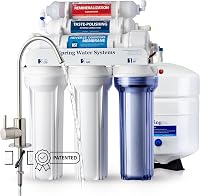
The APEC ROES-50 is a good fit for routine drinking and cooking water if your kitchen has room for a storage tank and separate faucet. Its five-stage system has a 50 GPD rating, with an installation kit and filters included.
Choose it when you want a conventional under-sink setup without an added mineral stage. Before buying, check cabinet access, water pressure and how much filtered water you draw at once, since those details matter more than the stage count alone.
The APEC ROES-50 at a glance
The ROES-50 suits buyers who can give permanent cabinet space to drinking-water filtration. Its separate faucet keeps filtered water available at the sink without using it for every dishwashing task.
APEC ROES-50: Best for everyday kitchen use

- 5-stage filtration
- 50 GPD rating
- Quick connection fittings
- Tank and brushed nickel faucet included
A conventional under-sink RO system for drinking and cooking water, with a storage tank and separate faucet. Choose it when your cabinet has service space and you don't want an added mineral stage.
Pros
- Includes tank, filter set and installation kit
- Brushed nickel drinking-water faucet included
- Quick connection fittings and colored tubing help with setup
Cons
- Tank takes additional cabinet space
- Separate faucet needs a suitable opening
- Filter changes require access below the sink
APEC says the system reduces contaminants including arsenic, chlorine, lead, fluoride and heavy metals. If you're buying for a specific water concern, match that concern to the system's documented reduction claims and certification scope.
Clear water and pleasant taste don't establish water quality. Start with your utility's water report or a suitable water analysis so you know what you need the system to address.
What the APEC ROES-50 package includes
The package includes a filter set, storage tank, brushed nickel faucet, installation kit and instructions. Quick connection fittings and colored tubing help you identify connections during setup and later service.
A complete kit still needs a suitable place to go. Your plumbing layout, countertop material and available faucet opening determine whether installation is a simple DIY job or work better left to a plumber.
Who should choose the APEC ROES-50?
Choose the ROES-50 for daily kitchen use with time between larger draws. A storage tank holds treated water for use while the membrane makes more, which suits a mix of glasses, kettle fills and cooking tasks.
Think about your busiest period rather than household size alone. Filling several bottles before work and then a large cooking pot can place more demand on stored water than occasional glasses spread throughout the day.
The system also suits buyers who will keep a filter schedule and leave the cabinet accessible. A filter assembly squeezed behind cleaning supplies may fit on installation day but become awkward at every service.
Skip it if adding a faucet isn't practical or the tank would block your disposal, shutoff valves or storage needs. Our guide to the best under-sink reverse osmosis systems compares other kitchen layouts.
If you're still deciding within the brand, start with the best APEC reverse osmosis systems. Choose the layout and maintenance needs first, then narrow the model.
How does the ROES-50 compare with other APEC systems?
Choose among these models by mineral preference, water demand and spare-filter needs. The PH75 adds calcium, the RO-90 raises rated production, and the 50X bundles extra pre-filters.
| System | Rated capacity | Stages | Main reason to choose it |
|---|---|---|---|
| APEC ROES-50 | 50 GPD | 5 | Everyday drinking and cooking water |
| APEC ROES-PH75 | 75 GPD | 6 | Added calcium minerals |
| APEC RO-90 | 90 GPD | 5 | Higher daily water demand |
| APEC ROES-50X | 50 GPD | 5 | Spare stage 1–3 pre-filters included |
GPD means gallons per day, a production rating rather than the amount available immediately from the faucet. Water temperature, feed pressure and water conditions can affect actual RO production.
Usable stored water is a separate consideration. Don't assume a higher GPD figure means a larger tank or that you can draw the entire daily rating in one sitting.
APEC ROES-50 vs. ROES-PH75
Choose the ROES-PH75 for its calcium mineral cartridge, especially if you prefer a mineral taste in drinking water. APEC uses that cartridge to add calcium and raise alkalinity after RO filtration.
Skip the PH75 if you don't want mineral addition or another cartridge to maintain. An extra stage serves a different preference; it isn't a reason by itself to replace a system that already meets your needs.
Taste preferences vary, so think about the water you already enjoy drinking. Read our APEC ROES-PH75 comparison with the iSpring RCC7AK if a mineral stage is a priority and you're comparing brands.
APEC ROES-50 vs. RO-90
Choose the RO-90 when repeated water draws make production a priority. It is the stronger candidate here for a kitchen that fills pitchers, bottles and cooking pots throughout the day.
Higher rated production matters most when the system needs to replenish stored water between uses. It doesn't establish faucet speed or how much water a full tank will deliver.
Skip this step up if your use is light and spread out. First confirm that the ROES-50's layout and expected production meet your needs rather than choosing the largest number automatically.
APEC ROES-50 vs. ROES-50X
Choose the ROES-50X if you want spare pre-filters ready for a future change. Its extra set covers stages 1–3, while the core filtration format and rated production match the ROES-50.
That bundle suits someone who prefers to organize maintenance supplies at installation. Keep the spares sealed in a clean, dry place and record which stages they replace.
Skip the X version if you prefer to buy replacements when due. The included spares don't cover every stage or extend the service interval of filters already installed.
How much cabinet space should you allow?
Allow room for the assembly, tank, tubing and filter service, not just the space each component occupies. Measure around drain pipes, disposal equipment, valves and pullout organizers before choosing a position.
APEC describes the ROES-50 tank as 11 inches wide and 15 inches high. Leave additional room around the filter assembly to follow the manual's removal and replacement steps.
A cardboard footprint can help you check the layout before installation. Place it where each component would sit, then make sure you can still reach the water shutoff and move the parts needed for maintenance.
Plan the tubing route at the same time. Avoid tight bends, pinched lines and paths where stored items can pull on a connection.
For a cabinet already crowded with plumbing, compare tankless vs. tank reverse osmosis. Removing a storage tank changes the space plan, but you still need access for service.
What should you check before installation?
Confirm feed pressure, cold-water access, drain connection and faucet placement before starting. These checks prevent a partly installed system from becoming a plumbing project you weren't prepared for.
All four systems here have an operating pressure range of 40–85 psi. Check your supply against that range rather than judging pressure by how forcefully water comes from a standard faucet.
Use the cold-water supply specified in the instructions. RO systems also send a reject-water stream to the drain, so include the drain connection in your plan.
Check whether an existing sink opening can accept the drinking-water faucet. If drilling is needed, identify the surface material and the right method before making a hole.
For DIY installation, read the full manual before cutting tubing or fastening components. Shut off the supply, relieve pressure and follow the specified connection order.
Make tubing cuts square and seat each connection as directed. Colored lines help with routing, but they don't replace checking that every line reaches the correct port.
Complete the initial flushing and tank preparation in APEC's instructions before using the water. Recheck connections during filling and dispensing, then keep the cabinet accessible so you can spot moisture.
Our reverse osmosis installation guide covers the general workflow. Use the supplied manual for this system's exact fittings, flushing steps and startup procedure.
How should you plan daily use and filter care?
Plan around larger draws and a written service schedule. A tank system works best when you understand that dispensing stored water and producing replacement water happen at different rates.
If your household fills several bottles each morning, spread out those fills when practical. A slower stream after a large draw may reflect depleted storage, so note whether it recovers after the system has time to refill.
APEC recommends ROES-50 filter replacement every 6–24 months depending on incoming water quality. Follow the schedule for each stage rather than assuming every filter needs changing together.
Write the installation date and next service dates somewhere easy to find. Record the exact replacement parts so you don't confuse a pre-filter set with a membrane or finishing filter.
During service, follow the manual's shutoff, pressure-relief and sanitation steps. Keep hands and replacement parts clean, and inspect seals and connections before restoring water.
A change in taste or flow deserves attention, but neither tells you which part needs service by itself. Check the maintenance record, supply valve and tubing before assuming the membrane is the cause.
See how long reverse osmosis filters last for more on stage-specific care. Consult APEC's ROES-50 information and the supplied manual for model-specific instructions.
Which buying mistakes should you avoid?
Avoid choosing by stage count or daily capacity alone. The right system must fit your water needs, cabinet and willingness to maintain it.
- Buying RO only for a chlorine taste concern: A simpler filter may meet your goal if dissolved-contaminant reduction isn't needed.
- Treating GPD as instant delivery: Consider your largest back-to-back draws and how much stored water you need.
- Measuring only the filter assembly: Include the tank, tubing paths and room to remove filters.
- Assuming extra filters cover the whole system: The 50X bundle adds pre-filters, not replacements for every stage.
- Delaying care until taste changes: Use the manual's schedule and your water conditions to plan service.
A basic TDS meter can help track changes in dissolved solids, but it doesn't identify individual contaminants or prove water is safe. Use the appropriate water analysis for the concern you're trying to address.
If you're unsure which filtration approach fits, our guide to choosing a reverse osmosis system for your kitchen helps connect water needs with installation and care requirements.
Is the APEC ROES-50 the right pick for your kitchen?
Choose the APEC ROES-50 for routine kitchen water when you can accommodate its tank, faucet and service needs. Make the final choice after checking your cabinet, supply pressure and busiest period of water use.
Pick the ROES-PH75 if added calcium is your priority, the RO-90 if you need higher rated production, or the ROES-50X if spare pre-filters simplify your maintenance plan.
Before ordering, sketch where the components will go and confirm the faucet location. Then use our APEC reverse osmosis guide to compare the models against those requirements.
Frequently asked questions
Is the APEC ROES-50 worth considering?
Yes, the APEC ROES-50 is worth considering for routine drinking and cooking water if your kitchen has room for its tank, filter assembly and separate faucet. Choose another layout if cabinet space is tight, or compare higher-output models if you regularly draw large amounts in a short period.
How often do APEC ROES-50 filters need replacement?
APEC recommends replacement every 6–24 months based on incoming water quality, with the manual guiding the schedule for each stage. Don't give every filter the longest interval by default.
Record installation and replacement dates, and investigate a change in flow or taste rather than waiting for the calendar alone.
What is the difference between the APEC ROES-50 and ROES-PH75?
The ROES-50 has five stages and a 50 GPD rating, while the ROES-PH75 has six stages, a 75 GPD rating and a calcium mineral cartridge. Choose the PH75 if you want added calcium in your drinking water; choose the ROES-50 if you prefer a system without that extra stage.
Does the APEC ROES-50 need a separate faucet?
Yes, the ROES-50 uses a separate drinking-water faucet, and a brushed nickel faucet comes with the system. Check for a suitable sink or countertop opening before ordering.
If a new hole is needed, confirm the surface material and installation method before deciding whether to handle the work yourself.