6 Best Under Sink Reverse Osmosis Systems (October 2026)
The best under sink reverse osmosis systems include the iSpring RCC7AK-BN for most kitchens, the APEC ROES-50 for basic drinking needs, and the APEC ROES-PH75 for calcium mineral preferences.
On this page (11 sections)
- Which under sink reverse osmosis systems stand out?
- How we chose these under-sink RO systems
- How do the best under sink RO systems compare?
- Best under sink reverse osmosis system picks
- What should you check before buying an under-sink RO system?
- Is a tank or tankless RO system better for your routine?
- Which filtration extras are worth choosing?
- How should you prepare for under-sink RO installation?
- How do you care for an under-sink RO system?
- What mistakes should you avoid when choosing an RO system?
- Which best under sink reverse osmosis system fits your kitchen?
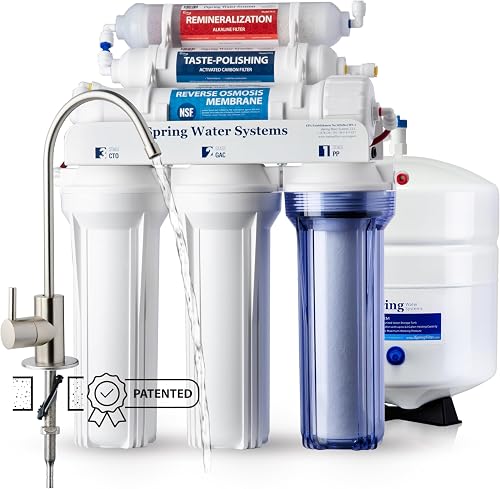
The iSpring RCC7AK-BN is the best under sink reverse osmosis system for most kitchens with room for a storage tank. It combines mineralization, iSpring's full-system NSF/ANSI 58 certification and faucet hardware that tightens from above the counter.
The Waterdrop G5P500A is the stronger fit when a separate reservoir would crowd your cabinet and you have power nearby. APEC's options cover simpler filtration, calcium addition and higher daily production in a tank layout.
Start with what your water needs and what your kitchen can hold. If your main concern is taste and you want to compare simpler options, see our guide to under-sink water filters and RO systems.
Our picks at a glance
-
1
-
2

-
3

Which under sink reverse osmosis systems stand out?
The iSpring RCC7AK-BN offers the most useful mix for a typical kitchen. The remaining picks solve more specific needs, from leaving out mineralization to fitting a crowded cabinet.
A lower-ranked system can still be your best choice if it meets a firm requirement. For example, a tankless layout matters more than an overall score when your cabinet cannot hold a reservoir.
iSpring RCC7AK-BN: Best for most kitchens
- Full-system NSF/ANSI 58 certification
- Alkaline mineral stage
- 75 GPD
- Top-mounted faucet fastener
Choose this tank system for mineralization and faucet hardware that tightens from above the counter. It runs without electricity.
Pros
- iSpring reports full-system NSF/ANSI 58 certification
- Mineral stage included
- Faucet hardware tightens from above
Cons
- Separate tank needs cabinet space
- Mineral cartridge adds a replacement task
APEC ROES-50: Best for basic drinking needs
- 5-stage filtration
- 50 GPD
- Tank and brushed nickel faucet included
- Quick connection fittings and colored tubing
A conventional choice for drinking water and routine kitchen use without an added mineral cartridge. The package includes the tank, faucet, filters and installation kit.
Pros
- No added mineral cartridge to maintain
- Quick connection fittings and colored tubing
- Installation kit and instructions included
Cons
- Lower daily production than the other picks
- Separate tank needs cabinet space
APEC ROES-PH75: Best for calcium mineral preferences
- 6-stage filtration
- 75 GPD
- Calcium mineral stage
- 40–85 psi feed pressure
This APEC tank system adds a calcium cartridge after RO filtration. It suits buyers who specifically want mineral addition rather than a basic five-stage layout.
Pros
- Calcium mineral stage included
- APEC reports WQA certification
- Tank, faucet and installation parts included
Cons
- Extra cartridge to replace
- Tank requires room beside the filter assembly
Waterdrop G5P500A: Best for crowded sink cabinets

- Tankless design
- 8-stage filtration with mineralization
- 500 GPD
- 2:1 pure-to-drain ratio
The tankless layout removes the need to fit a separate reservoir under the sink. Choose it when cabinet space matters and you can provide power and the required faucet opening.
Pros
- No separate storage tank
- Mineralization included
- Appliance connections available through Waterdrop XT
Cons
- Requires electrical power
- Waterdrop specifies drilling for faucet installation
- Maximum supported feed-water TDS is 500 ppm
APEC RO-90: Best for frequent kitchen use

- 5-stage filtration
- 90 GPD
- Water-pressure operation
- 40–85 psi feed pressure
The highest-output tank model here suits households drawing RO water for drinks and cooking throughout the day. It leaves out mineralization and operates on water pressure.
Pros
- Highest daily production among these tank models
- APEC reports WQA Gold Seal certification
- Tank, faucet and installation parts included
Cons
- No mineral stage
- Higher production does not increase tank storage
iSpring RCC7AK-UV: Best for UV treatment plans

- 7-stage filtration
- Alkaline mineral stage
- Flow-activated LED UV stage
- Full-system NSF/ANSI 58 and 372 certification
Choose this model when UV belongs in your water-treatment plan and you also want mineralization. The UV stage needs power, and the complete installation needs room for a tank.
Pros
- iSpring reports full-system NSF/ANSI 58 and 372 certification
- Flow-activated, mercury-free LED UV
- Top-mounted faucet fastener
Cons
- Requires electrical power
- More treatment stages to manage
- Source-water suitability still needs checking
How we chose these under-sink RO systems
We compared water-treatment features, installation needs and everyday kitchen use. Certification scope, replacement tasks and space requirements carry more weight than the number of filtration stages alone.
The order favors a balanced choice first, followed by models for specific needs. We also separated daily production from stored water, since those numbers answer different buying questions.
How do the best under sink RO systems compare?
Compare tank style and treatment needs first, then use daily production to narrow your choices. A system that fits your water supply and cabinet is more useful than one with extra stages you don't need.
| Product | Best for | Daily capacity | Stages | Design | Our score |
|---|---|---|---|---|---|
| iSpring RCC7AK-BN | most kitchens | 75 GPD | 6-stage | Tank system with brushed nickel faucet | 9.3 |
| APEC ROES-50 | basic drinking needs | 50 GPD | 5-stage | Tank system | 9.0 |
| APEC ROES-PH75 | calcium mineral preferences | 75 GPD | 6-stage | Tank system with faucet | 8.6 |
| Waterdrop G5P500A | crowded sink cabinets | 500 GPD | 8-stage | Tankless, corded electric | 8.2 |
| APEC RO-90 | frequent kitchen use | 90 GPD | 5-stage | Tank system | 7.9 |
| iSpring RCC7AK-UV | UV treatment plans | 75 GPD | 7-stage | Tank system with corded UV stage | 7.8 |
Best under sink reverse osmosis system picks
Choose the iSpring RCC7AK-BN for a balanced tank setup, or use the write-ups below to match a more specific need. Each recommendation includes the main reason to buy and the reason to move on.
iSpring RCC7AK-BN: Best for most kitchens
- Full-system NSF/ANSI 58 certification
- Alkaline mineral stage
- 75 GPD
- Top-mounted faucet fastener
Choose this tank system for mineralization and faucet hardware that tightens from above the counter. It runs without electricity.
Pros
- iSpring reports full-system NSF/ANSI 58 certification
- Mineral stage included
- Faucet hardware tightens from above
Cons
- Separate tank needs cabinet space
- Mineral cartridge adds a replacement task
The iSpring RCC7AK-BN suits buyers who want mineralized RO water without adding an electrical requirement. Its 75 GPD membrane serves a storage-tank layout, so water production and the amount ready at the faucet are separate considerations.
iSpring reports NSF/ANSI 58 certification for the complete system. That makes it a useful starting point for shoppers who want more than a certification attached to an individual component.
The top-mounted faucet fastener is especially helpful when plumbing makes the underside of the counter hard to reach. It reduces the work at that mounting point, though the feed-water and drain connections still need access below.
A clear first-stage housing lets you spot sediment buildup. Use that view as an extra maintenance cue, since a clean-looking housing doesn't reveal the condition of the membrane or carbon filters.
Skip it if fitting a tank would block storage or service access. If it fits, keep the housings reachable and leave room to remove them during filter changes.
Our reverse osmosis system installation guide explains the connections to plan before clearing the cabinet.
APEC ROES-50: Best for basic drinking needs
- 5-stage filtration
- 50 GPD
- Tank and brushed nickel faucet included
- Quick connection fittings and colored tubing
A conventional choice for drinking water and routine kitchen use without an added mineral cartridge. The package includes the tank, faucet, filters and installation kit.
Pros
- No added mineral cartridge to maintain
- Quick connection fittings and colored tubing
- Installation kit and instructions included
Cons
- Lower daily production than the other picks
- Separate tank needs cabinet space
The APEC ROES-50 is a sensible choice for routine drinking and cooking needs without mineral addition. Its five-stage design keeps the treatment path simpler than models that add a mineral cartridge or UV.
The package includes the filter set, tank, brushed nickel faucet, installation kit and instructions. Quick connection fittings and colored tubing help you follow the water path during setup and later service.
Its 50 GPD rating describes membrane production across a day, rather than the volume you can pour at once. For a household filling a few glasses at a time, the ready supply in the tank matters more than chasing the largest daily number.
APEC recommends filter replacement over a 6–24 month range, depending on the filter and incoming water quality. Keep a record for each cartridge rather than assigning one change date to the whole system.
Choose it if you want a conventional setup and don't care about added minerals. Skip it if you often empty a tank in one session, such as filling several large bottles and a cooking pot together.
APEC ROES-PH75: Best for calcium mineral preferences
- 6-stage filtration
- 75 GPD
- Calcium mineral stage
- 40–85 psi feed pressure
This APEC tank system adds a calcium cartridge after RO filtration. It suits buyers who specifically want mineral addition rather than a basic five-stage layout.
Pros
- Calcium mineral stage included
- APEC reports WQA certification
- Tank, faucet and installation parts included
Cons
- Extra cartridge to replace
- Tank requires room beside the filter assembly
The APEC ROES-PH75 is for buyers who specifically want calcium added after reverse osmosis. APEC says the calcium cartridge raises pH, making this a taste and water-preference choice rather than a reason to expect health benefits.
Its six-stage layout includes the mineral cartridge, and APEC reports WQA certification. The package supplies the tank, faucet, tubing, drain saddle, feed adapter and wrenches.
This model accepts feed pressure of 40–85 psi and feed-water TDS up to 2,000 ppm. Those limits help screen compatibility, but they don't settle every source-water concern, such as sediment or hardness.
Buy it when calcium mineralization is a feature you want to keep paying attention to during maintenance. An extra cartridge means another part to track, not simply an extra benefit at installation.
Skip it if you prefer water without added minerals or want fewer replacement parts. The ROES-50 is the simpler APEC choice for that use.
For a broader look at mineral choices, see our guide to reverse osmosis systems with remineralization.
Waterdrop G5P500A: Best for crowded sink cabinets
- Tankless design
- 8-stage filtration with mineralization
- 500 GPD
- 2:1 pure-to-drain ratio
The tankless layout removes the need to fit a separate reservoir under the sink. Choose it when cabinet space matters and you can provide power and the required faucet opening.
Pros
- No separate storage tank
- Mineralization included
- Appliance connections available through Waterdrop XT
Cons
- Requires electrical power
- Waterdrop specifies drilling for faucet installation
- Maximum supported feed-water TDS is 500 ppm
The Waterdrop G5P500A suits crowded cabinets where a separate tank is hard to place. Its body measures 16.69 x 5.69 x 13.9 in, so map that footprint around the disposal, drain trap and supply valves.
Waterdrop rates production at 500 GPD and states a 2:1 pure-to-drain ratio. That ratio means 2 parts purified water for each part sent to the drain under the stated operating conditions.
This is a corded electric system with a maximum supported feed-water TDS of 500 ppm. Skip it if your incoming water exceeds that limit or you cannot provide suitable electrical access.
The faucet stands 11.3 in tall, and Waterdrop specifies drilling for installation. Check counter clearance and the drilling plan before choosing it, especially with a stone counter or a rental kitchen.
Waterdrop XT supports connections to appliances such as a refrigerator or ice maker. Treat that as a separate hookup to plan, including the accessory, tubing route and appliance requirements.
Choose it for cabinet space and direct production with mineralization. Our best tankless reverse osmosis systems guide covers other options in this format.
APEC RO-90: Best for frequent kitchen use
- 5-stage filtration
- 90 GPD
- Water-pressure operation
- 40–85 psi feed pressure
The highest-output tank model here suits households drawing RO water for drinks and cooking throughout the day. It leaves out mineralization and operates on water pressure.
Pros
- Highest daily production among these tank models
- APEC reports WQA Gold Seal certification
- Tank, faucet and installation parts included
Cons
- No mineral stage
- Higher production does not increase tank storage
The APEC RO-90 is the tank-system choice for frequent drinking and cooking use throughout the day. Its 90 GPD rating is the highest daily production figure among the tank models here.
That added production is useful when the system has repeated refill work between draws. It doesn't increase reservoir size, so don't choose it solely because you want to fill one very large container without pausing.
APEC reports WQA Gold Seal certification for the system. The five-stage design leaves out mineralization and runs on water pressure, which suits buyers who want to avoid an electrical connection.
The package includes the tank, faucet, filter set and installation parts. APEC uses JG Quick Connect fittings, so careful tube preparation and full insertion remain important during setup.
Choose it if your household uses RO water for more than occasional glasses and you have room for the reservoir. Skip it if you need mineral addition or a tankless layout, since its higher production doesn't solve either requirement.
Before buying, compare how often you draw water with how much you need in a single session.
iSpring RCC7AK-UV: Best for UV treatment plans
- 7-stage filtration
- Alkaline mineral stage
- Flow-activated LED UV stage
- Full-system NSF/ANSI 58 and 372 certification
Choose this model when UV belongs in your water-treatment plan and you also want mineralization. The UV stage needs power, and the complete installation needs room for a tank.
Pros
- iSpring reports full-system NSF/ANSI 58 and 372 certification
- Flow-activated, mercury-free LED UV
- Top-mounted faucet fastener
Cons
- Requires electrical power
- More treatment stages to manage
- Source-water suitability still needs checking
The iSpring RCC7AK-UV is for buyers whose treatment plan calls for UV alongside RO and mineralization. It adds a flow-activated, mercury-free LED UV stage and needs electrical access.
iSpring reports full-system NSF/ANSI 58 and 372 certification. The top-mounted faucet fastener and clear sediment housing also make installation access and visible sediment checks part of this model's appeal.
Choose the extra stage for a defined water-treatment need. A UV label alone doesn't establish that a system is suitable for untreated water, and dissolved chemicals require a different treatment decision from microbes.
Skip it if your only concern is taste and your water assessment doesn't call for UV. The RCC7AK-BN provides the non-UV alternative here, with fewer treatment stages to manage.
Allow cabinet room for the assembly, tank and connections, plus safe access to power. Avoid choosing it first and trying to solve a crowded installation afterward.
If low pressure is also a concern, our booster pump guide for reverse osmosis explains when pressure support belongs in the plan.
What should you check before buying an under-sink RO system?
Check source-water suitability and physical fit before comparing extras. Those two steps can rule out a system even when its capacity and features look right.
Match the best under sink reverse osmosis system to your water
Start with your utility's water report or a current private-well water analysis. Identify the substances you need reduced, then match those needs to the system's certified reduction claims and feed-water limits.
TDS measures the total amount of dissolved substances, not which substances are present. A TDS reading cannot tell you whether lead, PFAS or microbes are absent.
Hardness, sediment and iron can also affect membrane care and pretreatment needs. For a private supply, our guide to reverse osmosis systems for well water explains the questions to settle before choosing kitchen equipment.
Measure service space, not just the empty footprint
A system fits only if you can install it and maintain it. Measure around the drain trap, disposal, shutoff valves and any pull-out storage.
For tank models, draw separate footprints for the assembly and reservoir. Leave tubing slack without sharp bends, and keep the feed valve reachable.
Filter changes may require space below housings or beside cartridges. A layout that fits tightly on day one can become a problem when you need to remove a wet filter.
Check pressure at the proposed connection
Use the system's required feed-pressure range to judge compatibility. Low pressure can slow production, while excessive pressure can require correction before installation.
The APEC tank models here specify 40–85 psi, while the Waterdrop specifies 14.5–87 psi. Don't apply one model's limits to another, and check the installation instructions for the exact system you choose.
An advertised daily output assumes defined operating conditions. Cold feed water and lower pressure can reduce actual production, so leave room in your plan for seasonal changes.
Is a tank or tankless RO system better for your routine?
Choose a tank for stored water or tankless for a layout without a separate reservoir. The better choice depends on how you fill glasses, bottles and cooking pots.
A tank system makes water gradually and stores it between uses. Several large draws close together can use that ready supply faster than the membrane replaces it.
Tankless equipment produces water as you draw it, so faucet flow matters during each fill. Don't compare its daily production number directly with the pour rate from a full storage tank.
Think through your busiest use: morning bottles, coffee preparation or dinner cooking. Our tankless vs tank RO comparison helps connect those habits to the right layout.
Which filtration extras are worth choosing?
Choose mineralization for your water preferences and UV for a defined treatment need. Neither feature is a reason to ignore the basic match between your source water and the system.
Mineral stages change the water after RO
A mineral cartridge adds minerals after the membrane removes many dissolved substances. The resulting taste and pH depend on the cartridge, incoming water and operating conditions.
Don't buy on the assumption that a higher pH means better health. Decide whether you want the added-mineral feature enough to include its cartridge in your replacement plan.
Certification scope matters more than stage count
Check what is certified and which reductions are covered. A standard attached to a component doesn't describe the same scope as certification for a complete system.
NSF/ANSI 58 addresses RO systems, while NSF/ANSI 372 concerns lead content in materials. The latter does not establish how much lead a system removes from incoming water.
Stage counts describe treatment steps, and several steps may be combined inside one cartridge. They don't provide a useful ranking of contaminant reduction by themselves.
How should you prepare for under-sink RO installation?
Plan the cold-water feed, drain, faucet and service access before assembling the system. Power-dependent models also need a suitable outlet within reach.
Confirm the faucet and drain plan
Look for an available mounting opening and enough space for the faucet base and handle. Don't assume a spare hole will fit without checking its size.
If drilling is needed, plan for the counter material and any permissions required. Stone, porcelain and metal call for different tools and methods.
Follow the manual's drain connection location and routing instructions. Keep tubing clear of disposal vibration, sharp edges and items that could pull a fitting loose.
Make connections carefully and flush as directed
Shut off the cold-water supply and relieve pressure before working on the feed connection. Cut tubing square, insert it fully into quick-connect fittings and check that it is secure.
Follow the exact startup and flushing procedure before drinking the water. Tank models may require filling and draining cycles, so leave time for commissioning rather than expecting immediate use.
Check dry connections with a paper towel during startup and after the first refill. Our reverse osmosis installation guide walks through the process and helps you judge whether to use a plumber.
How do you care for an under-sink RO system?
Keep separate replacement dates for each filter and follow the system's sanitation instructions. Sediment filters, carbon filters, membranes and mineral cartridges don't necessarily share one service life.
Record the installation date and exact replacement part numbers. Our guide to how long reverse osmosis filters last explains why incoming water and use affect those intervals.
Watch for changes without relying on taste alone
Slower refill, unusual taste or visible sediment buildup deserves attention. A clear housing helps with sediment checks, but it cannot show whether a carbon filter is exhausted.
A TDS meter can help track membrane performance when used according to the system instructions. Mineralization changes the final reading, so compare samples from the correct points rather than expecting zero at the faucet.
Keep the cabinet ready for service
Store cleaners and loose items where they won't press against tubing. Check for moisture periodically, especially after changing filters or moving things under the sink.
Use only compatible replacement parts, and follow shutdown or restart directions after a long absence. Before loosening a housing, close the feed, isolate the tank as directed and relieve pressure.
What mistakes should you avoid when choosing an RO system?
Avoid buying by the largest number on the box. A good purchase fits your water, your busiest draw and the maintenance you are willing to do.
- Confusing production with storage. GPD describes daily production, not tank volume or instant faucet flow.
- Ignoring drain water. RO sends a portion of incoming water to the drain, and actual use depends on operating conditions.
- Planning appliance hookups afterward. Refrigerator connections may need accessories and enough delivery pressure.
- Forgetting replacement access. Know the cartridge names and leave physical room to change them.
- Treating extra stages as automatic upgrades. Add mineralization or UV because it meets a need.
- Sizing from household count alone. Cooking habits and large bottle fills can matter more than the number of people.
Plan for ongoing filters, possible plumbing work and any required accessories as part of the purchase. A simpler system that you can service regularly is a better fit than a feature-heavy setup you struggle to maintain.
Which best under sink reverse osmosis system fits your kitchen?
The best under sink reverse osmosis system is the one that meets your water needs and fits your routine. Settle source-water compatibility, cabinet space and pressure before making the final choice.
- Choose iSpring RCC7AK-BN for a tank system with mineralization and easier faucet fastening.
- Choose APEC ROES-50 for a conventional setup without an added mineral cartridge.
- Choose APEC ROES-PH75 when calcium mineralization is a priority.
- Choose Waterdrop G5P500A when a separate tank would crowd the cabinet and its feed-water and power requirements fit.
- Choose APEC RO-90 for more daily production in a tank layout without mineralization.
- Choose iSpring RCC7AK-UV when UV belongs in your treatment plan.
Before ordering, sketch the installation and write down the replacement parts you'll need. If you're still deciding whether RO suits your water problem, use our under-sink water filter comparison to make that choice first.
Our top 3 picks at a glance
-
1
-
2
-
3
Frequently asked questions
What is the best under sink reverse osmosis system for most homes?
The iSpring RCC7AK-BN is our first choice for most kitchens with room for a tank. It combines a mineral stage, faucet hardware that tightens from above and iSpring's full-system NSF/ANSI 58 certification.
Choose the Waterdrop G5P500A instead when avoiding a separate tank matters more and power is available.
Is tankless reverse osmosis better than a tank system?
Tankless RO is better when a separate reservoir would crowd your cabinet, while a tank system stores filtered water for later use. Compare refill needs, power access and service clearance before choosing.
Our tankless vs tank reverse osmosis comparison explains how the two layouts fit different kitchen routines.
Do reverse osmosis systems add minerals back to water?
Only systems with a mineral stage add minerals after RO filtration. The iSpring RCC7AK-BN, APEC ROES-PH75, Waterdrop G5P500A and iSpring RCC7AK-UV include that feature.
Choose mineralization for your water preferences, while allowing for another cartridge in your maintenance plan.
Added minerals don't establish that water is safe to drink.
How do I choose an under-sink RO system?
Choose an under-sink RO system by matching your source water and kitchen space first. Then check feed pressure, electrical needs, faucet mounting, replacement filters and how much water you draw at once.
Our guide to choosing a reverse osmosis system helps you work through those decisions before comparing extra stages.