How Much Does a Reverse Osmosis System Cost?
Your reverse osmosis system cost includes equipment, installation, replacement filters, water use, and electricity for powered models. Compare these expenses over the same ownership period, including any plumbing or outlet work your kitchen needs.
On this page (8 sections)
- What determines reverse osmosis system cost?
- Does a tank or tankless system cost less overall?
- How much should you budget for installation?
- How do replacement filters affect the long-term cost?
- How much do drain water and electricity add?
- What costs and mistakes can you prevent after installation?
- Is a reverse osmosis system worth the cost?
- Which reverse osmosis system cost fits your household?
Your reverse osmosis system cost is the equipment plus installation, replacement filters, water use, and electricity for powered models. The best value is the system that fits your kitchen and drinking-water needs without adding features or installation work you don't need.
Compare complete setups over the same ownership period. An included tank or faucet can reduce extra shopping, while an awkward cabinet or missing outlet can change which model makes sense.
What determines reverse osmosis system cost?
Equipment, installation, and ongoing care determine your total spending. Compare these together, because a lower equipment cost can come with more plumbing work or a higher filter bill.
Build your budget around:
- Equipment: the system and any required parts not included.
- Installation: labor, adapters, faucet mounting, and drain work.
- Power: outlet installation if needed, plus electricity use.
- Filters: prefilters, the RO membrane, postfilters, and any mineral cartridge.
- Water: both the drinking water produced and water sent to the drain.
- Service: occasional repairs or replacement parts.
For a broader look at features, see our guide to choosing a reverse osmosis system. Start with your water concerns, then choose the equipment that addresses them.
Compare reverse osmosis system costs over the same period
Use a 3-year or 5-year worksheet so every option gets a fair comparison. Add the system, setup work, scheduled filter replacements, and estimated utility use for that period.
Check whether the initial filters are included before counting replacements. A membrane due for replacement near the end of your chosen period still belongs in the estimate.
Keep uncertain repair expenses separate from scheduled upkeep. This shows what you expect to spend without pretending you can predict every future fault.
Does a tank or tankless system cost less overall?
Neither design always costs less; cabinet fit, filter costs, and installation needs decide the better value. A tank system stores treated water for later use, while a tankless model produces water without a separate storage tank.
Daily production capacity isn't the same as faucet flow. A tank can supply stored water quickly, but its refill time matters after heavy use; a tankless model's dispensing flow matters when filling large containers.
For a closer comparison, read tankless vs tank reverse osmosis systems. If you're weighing kitchen options more broadly, our under-sink water filter and RO guide is another useful starting point.
APEC ROES-50: for a straightforward tank setup
The APEC ROES-50 suits households that want a conventional drinking-water system and have room for a separate tank. Its 5-stage design is rated for 50 gallons per day, and it includes a brushed nickel faucet, tank, filter set, and installation kit.
Quick-connect fittings and colored tubing help with assembly and later service. Its operating pressure range is 40–85 psi, so check your home's supply pressure before ordering.
Skip it if a storage tank would block cabinet access or if you specifically want remineralization. When measuring, leave enough space to reach the filter housings rather than fitting everything tightly around the garbage disposal.
iSpring RCC7AK-BN: for mineral taste without an outlet
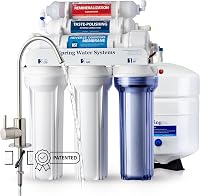
The iSpring RCC7AK-BN suits buyers who want remineralization and operation without electricity. This 6-stage system is rated for 75 gallons per day and includes a storage tank and brushed nickel faucet.
The faucet fastener tightens from above the counter, which helps when reaching behind the sink is difficult. Its clear first-stage housing lets you see sediment buildup, though appearance alone doesn't set the replacement schedule.
Skip it if you can't spare tank space or don't want an extra mineral stage to maintain. Choose remineralization for your taste preference, rather than assuming an extra stage makes every system a better buy.
How much should you budget for installation?
Base your installation budget on the actual work under your sink. A ready faucet opening and sound plumbing make a different job from drilling a countertop, altering a drain, or adding power.
Before requesting a quote, photograph the cabinet and note:
- Whether there's a usable opening for the drinking-water faucet.
- The cold-water shutoff and supply connection.
- The drain layout and garbage disposal position.
- Cabinet dimensions, including pipes and door hinges.
- Outlet location for a powered model.
- Space to remove filters during service.
Ask the installer to separate routine fitting from extra work. This makes quotes easier to compare and helps you spot an estimate that leaves out countertop drilling or electrical work.
DIY-friendly fittings don't remove the need to follow the manual. Read our reverse osmosis system installation cost guide before deciding which parts of the job you can handle.
Waterdrop G2P600: for tankless storage savings
The Waterdrop G2P600 suits buyers who want cabinet space without a separate tank. Its body measures 17.3 x 5.9 x 14 inches, and it uses corded electric power.
It offers 600 GPD production capacity, 2 included filters, and filter-life indicators. Twist-and-pull cartridges simplify changes without opening filter housings.
Skip it if adding an outlet would erase the value of the tankless setup. Also check your incoming water: its maximum supported TDS level is 500 ppm, so source-water suitability comes before convenience features.
Waterdrop G3P600: for reminders at the faucet
The Waterdrop G3P600 suits buyers who want filter reminders where they dispense water. Its smart faucet shows TDS and filter life, and the system requires under-sink electricity.
Waterdrop certifies it to NSF/ANSI 58 for TDS reduction and NSF/ANSI 372 for lead-free materials. Those certifications address specific claims, so match the claim to your water concern rather than relying on a certification logo alone.
Skip it if you won't use the display or prefer a setup without powered components. Measure for its 18.12 x 5.67 x 17.72-inch body and leave service clearance.
How do replacement filters affect the long-term cost?
The full replacement schedule matters more than one cartridge's cost. Prefilters, membranes, and finishing filters may need changes at different times.
APEC recommends filter replacement every 6–24 months, depending on incoming water quality. That range doesn't mean every cartridge should stay in place for the longest interval.
For each model, record the exact filter names, required quantities, and change intervals. Check that a bundled replacement set includes everything due at that service point, rather than assuming every set includes the membrane.
Use calendar reminders even if the system has an indicator. Record installation and replacement dates, follow flushing instructions, and use the manufacturer's sanitation procedure when servicing housings.
Our guide to how long reverse osmosis filters last explains why water quality and use can change the schedule. A clear housing or acceptable taste doesn't prove that every cartridge is still effective.
How much do drain water and electricity add?
RO uses more incoming water than it delivers for drinking, and powered models also use electricity. Include both when comparing ongoing expenses, especially where water and sewer charges are high.
Both Waterdrop models here have a stated 2:1 pure-to-drain ratio. That means 2 units of filtered water for each unit sent to the drain under the conditions used for that specification.
Don't apply that ratio to the APEC or iSpring models without checking their instructions. Actual water use can also change with supply conditions, flushing, and operating patterns.
You don't need a high daily capacity just to fill a few glasses. Choose around your busiest period, such as filling bottles before work, rather than buying capacity you'll rarely use.
What costs and mistakes can you prevent after installation?
Careful setup and timely maintenance reduce avoidable service calls. Follow the startup flush, inspect connections as instructed, and keep the shutoff accessible.
Don't push the system so far back that tubing bends sharply or filter changes require dismantling the cabinet. Keep cleaning supplies away from connections so bottles don't knock fittings loose.
Check for moisture after installation and after filter changes. If water appears, shut off the feed and use our guide to why a reverse osmosis system leaks to identify common trouble points.
Avoid using a TDS reading as proof that water is safe. TDS measures dissolved solids, so specific contaminant concerns call for suitable water analysis and matching reduction claims.
Is a reverse osmosis system worth the cost?
RO is worth considering when its filtration addresses a real water concern and you'll maintain it. Compare the complete ownership cost with the drinking-water option you currently use.
If your main concern is chlorine taste, compare a suitable carbon filter before committing to RO. Private-well water may need treatment beyond a kitchen system, so settle source-water needs before choosing from this group.
Our guide to whether a reverse osmosis system is worth it helps weigh those tradeoffs. Don't count bottled-water savings unless you'll actually reduce what you buy.
Which reverse osmosis system cost fits your household?
Choose by fit, upkeep, and useful features after comparing reverse osmosis system cost over the same period. A system you can service easily is a stronger choice than one that crowds your cabinet or strains your maintenance budget.
- Choose APEC ROES-50 for a conventional tank setup without a mineral stage.
- Choose iSpring RCC7AK-BN for remineralization and operation without electricity.
- Choose Waterdrop G2P600 for tankless space savings when its source-water limits suit your home.
- Choose Waterdrop G3P600 if faucet-level reminders justify the added feature for you.
Before ordering, confirm cabinet clearance, replacement-filter availability, and the work included in your installation quote. Use our installation cost guide to turn that shortlist into a complete budget.
Frequently asked questions
How much does a reverse osmosis system cost?
Your total includes equipment, installation, replacement filters, water use, and electricity for powered models. The amount depends on your kitchen and the system you choose.
Get current equipment and local installation quotes, then add recurring expenses over the same ownership period to compare options fairly.
Is it cheaper to install a reverse osmosis system yourself?
DIY installation can reduce upfront spending when your sink already has suitable connections and you have the tools and skills. Count any adapters, drilling tools, and other supplies before deciding.
Get professional help for unfamiliar plumbing changes, countertop drilling, or electrical work rather than treating those jobs as routine assembly.
Do tankless reverse osmosis systems cost more to maintain?
Tankless systems aren't automatically more expensive to maintain; cartridge costs and replacement schedules decide the filter budget. Compare every required cartridge, including the membrane, over the same period.
Quick-change filters can reduce service effort, while powered models also add electricity use and powered components that may eventually need repair.
What costs should I include besides the system?
Include installation labor, faucet or drain changes, electrical work if required, replacement filters, water and sewer charges, and possible service parts. Check which components come with the system before ordering extras.
Leave room in your budget for work that becomes clear only after inspecting the cabinet and plumbing.