6 Best iSpring Reverse Osmosis Systems (October 2026)
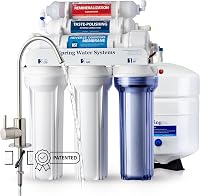
The best iSpring reverse osmosis systems include the iSpring RCC7AK-BN for everyday kitchen use, the iSpring RCC7P-AK for low water pressure, and the iSpring RCC7-BN for skipping added minerals.
On this page (8 sections)
- How we chose the best iSpring reverse osmosis systems
- Compare iSpring reverse osmosis systems
- The best iSpring RO systems by use
- What should you compare before choosing an iSpring RO system?
- How should you plan the iSpring RO installation?
- How do you care for an iSpring reverse osmosis system?
- What mistakes should you avoid with iSpring RO?
- Which iSpring reverse osmosis system should you choose?
The RCC7AK-BN is the best iSpring reverse osmosis system for most kitchens with adequate water pressure and space for its tank. Choose a different model when you need a booster pump, prefer water without added minerals, want a black faucet or have a specific reason to add UV.
Start with your water supply and cabinet layout, then choose the extra features. More stages won't solve low feed pressure, and a higher daily production figure won't tell you how quickly a pitcher fills.
For choices beyond this brand, see our best under-sink reverse osmosis systems. Our Waterdrop vs iSpring comparison helps if you're still deciding between brands.
Our picks at a glance
-
1
-
2

-
3

How we chose the best iSpring reverse osmosis systems
We put everyday fit ahead of extra stages, comparing each model's filtration design, certification, installation needs and purpose. A pump earns its place in a low-pressure home, while a mineral stage or faucet finish serves a different preference.
The RCC7AK-BN leads because its features suit a broad range of kitchens. The other models make sense when they address a constraint that the first pick doesn't.
Certification deserves a closer look than a logo alone. Check the exact model and covered reduction claims, since certification to one standard doesn't mean a system addresses every possible water concern.
The NSF drinking water treatment guide explains how to read certification information. Use that alongside your water report rather than choosing by the longest contaminant list.
Compare iSpring reverse osmosis systems
The pump, mineral stage, UV hardware, faucet finish and membrane rating are the differences that matter most here. Narrow the table to the feature you need, then check the installation details below.
| Product | Best for | Stages | Membrane capacity | Main difference | Our score |
|---|---|---|---|---|---|
| iSpring RCC7AK-BN | everyday kitchen use | 6 | 75 GPD | Remineralization and brushed nickel faucet | 9.3 |
| iSpring RCC7P-AK | low water pressure | 6 | 75 GPD | Built-in electric booster pump | 8.2 |
| iSpring RCC7-BN | skipping added minerals | 5 | 75 GPD | No remineralization stage | 8.1 |
| iSpring RCC7AK-BLK | matching black fixtures | 6 | 75 GPD | Black faucet finish | 8.0 |
| iSpring RCC7AK-UV | UV treatment plans | 7 | 75 GPD | Added LED UV stage | 7.8 |
| iSpring RCC2AK | frequent refill demand | 6 | 200 GPD | Higher membrane production rating | 7.0 |
A membrane's gallons-per-day figure describes production under specified conditions. It isn't a promise of that volume in your kitchen or a measure of the stream at the faucet.
Actual production depends on feed pressure, water temperature and source-water conditions. In a tank-based setup, stored water and the tank's condition also affect how much you can draw before waiting for a refill.
The best iSpring RO systems by use
Choose the RCC7AK-BN for a typical kitchen, then move to a specialist option only when its feature solves a clear need. Each model below includes a reason to buy it and a reason to choose something else.
iSpring RCC7AK-BN: Best for everyday kitchen use
- 6-stage filtration
- Alkaline remineralization
- NSF/ANSI 58 certified system
- Top-mounted faucet fastener
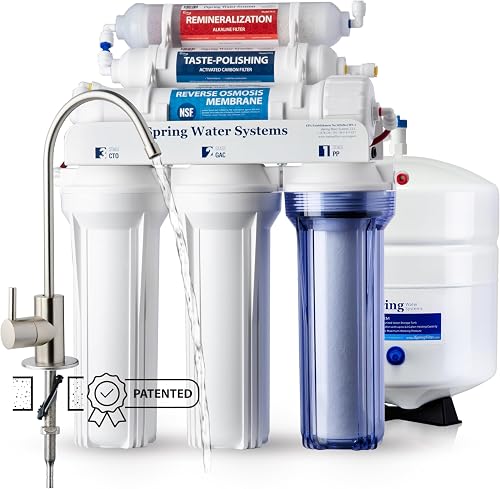
A balanced choice for kitchens that want added minerals and a brushed nickel faucet. The faucet fastener tightens from above, and the system includes a storage tank.
Pros
- iSpring certifies the full system to NSF/ANSI 58
- Faucet fastener tightens from above
- Operates without electricity
Cons
- Included storage tank needs cabinet space
- Mineral stage adds a replacement filter
The RCC7AK-BN suits households that want remineralized drinking water without adding powered equipment. Its 75 GPD membrane, included storage tank and brushed nickel faucet make it the natural starting point in this group.
The six-stage design adds minerals after RO filtration. Treat that as a taste choice, rather than a reason to expect a health benefit or a fixed final pH.
Its faucet fastener tightens from above the counter, which helps when the space behind the sink is hard to reach. You'll still need cabinet access for the feed connection, drain, tank and tubing.
The clear first-stage housing lets you spot visible sediment buildup. It doesn't show the condition of every filter, so keep a replacement record even when the housing looks clean.
Skip this model if low feed pressure is your main problem, or choose the RCC7-BN if you don't want added minerals. Our iSpring RCC7AK-BN review takes a closer look at its layout and fit.
iSpring RCC7P-AK: Best for low water pressure
- 6-stage filtration
- Electric booster pump
- Alkaline remineralization
- 100–240V power adapter
Choose this model when low feed pressure is the problem you need to solve. Its built-in booster pump works alongside RO filtration and a mineral stage.
Pros
- Built-in booster pump for low-pressure homes
- Includes alkaline remineralization
- Includes pump power adapter
Cons
- Requires an electrical connection
- Pump needs space and installation access
The RCC7P-AK is the better choice when measured feed pressure calls for a booster pump. It combines that pump with RO filtration and remineralization, rather than leaving you to plan a separate pump addition.
iSpring says the pump supports filtration at low pressure and reduces wastewater. That makes pressure the reason to choose it, rather than assuming every household needs a powered system.
Plan a suitable outlet and a dry, accessible place for the power connection. The included adapter supports 100–240V at 50/60Hz, but the cabinet still needs a sensible route for its cord.
A weak stream at your main kitchen faucet isn't enough to diagnose low RO feed pressure. A partly closed valve, clogged aerator or other plumbing restriction may be responsible.
Skip the pump model if your supply already meets the requirements and you have no pressure-related need for it. Our reverse osmosis system installation guide explains the plumbing work to plan before fitting the system.
iSpring RCC7-BN: Best for skipping added minerals
- 5-stage filtration
- NSF/ANSI 58 certified
- No power needed
- Brushed nickel faucet
The simpler choice for buyers who want RO water without a mineral stage. It operates without electricity and includes a brushed nickel faucet.
Pros
- iSpring certifies the system to NSF/ANSI 58
- No electrical connection needed
- One fewer stage than the alkaline models
Cons
- Does not add minerals back
- No built-in booster pump
The RCC7-BN suits buyers who want RO water without remineralization. Its five stages cover sediment, carbon pre-filtration, the RO membrane and final carbon polishing, with no electrical connection needed.
This is a good choice when you already prefer the taste of water without a mineral stage. It also removes one filter from the replacement schedule compared with the alkaline versions.
The brushed nickel faucet fits kitchens where that finish already matches the main tap. A transparent first-stage housing helps with visual checks, while a check valve helps prevent backflow.
Skipping remineralization doesn't remove the need for regular care. The pre-filters protect the membrane, and the final carbon filter still needs attention even if water looks clear.
Choose something else if you want minerals added back or need a built-in booster pump. Before ordering replacement cartridges, use our guide to reverse osmosis filter life to understand why different stages follow different schedules.
iSpring RCC7AK-BLK: Best for matching black fixtures

- 6-stage filtration
- Alkaline remineralization
- Black RO faucet
- NSF/ANSI 58 certified system
Pick this version when you want remineralization and a black drinking-water faucet. The finish makes it a better match for kitchens with black fixtures.
Pros
- Black RO faucet included
- Includes alkaline remineralization
- iSpring certifies the full system to NSF/ANSI 58
Cons
- Mineral stage adds a replacement filter
- Cabinet layout still needs careful measurement
The RCC7AK-BLK is the right choice when a black drinking-water faucet belongs in your kitchen and you want remineralization. The finish is its main buying reason, so choose it for the fixture you want to see every day.
Its six-stage system includes a mineral stage, quick-fitting connectors and a transparent first-stage housing. iSpring certifies the full system to NSF/ANSI 58.
The stated dimensions are 15.5 x 16 x 18 inches. Use those as a starting point for planning, then allow space around the equipment for tubing, connections and filter removal.
Check the faucet position against your main tap, backsplash and sink rim. A matching finish won't help if the new handle is awkward to reach or the spout sits poorly over the bowl.
Skip this version if black doesn't match your kitchen or another model better addresses your water supply. Pick the finish after settling pressure, filtration needs and cabinet fit.
iSpring RCC7AK-UV: Best for UV treatment plans

- 7-stage filtration
- Flow-activated LED UV stage
- Alkaline remineralization
- NSF/ANSI 58 and 372 certified
This model adds UV to RO filtration and remineralization. iSpring describes the current UV design as a mercury-free LED stage that activates with water flow.
Pros
- Adds UV treatment
- Includes alkaline remineralization
- iSpring certifies the full system to NSF/ANSI 58 and 372
Cons
- Requires an electrical connection
- UV suitability depends on the water treatment plan
The RCC7AK-UV suits a buyer whose water treatment plan specifically includes UV. It combines an added UV stage with RO and remineralization, and it needs an electrical connection.
iSpring identifies full-system NSF/ANSI 58 and 372 certification. Those standards shouldn't be read as a blanket promise that the system makes every untreated water source suitable for drinking.
Confirm the exact UV version before ordering: iSpring describes flow-activated LED hardware, while older material describes a lamp-based design. The distinction matters for installation, operation and care.
For well water, base the treatment plan on water analysis rather than adding UV by default. Sediment and other source-water conditions can affect which treatment steps belong before the drinking-water system.
Skip this model if you have no identified need for UV and want fewer components to manage. If pressure is the actual concern, our guide to reverse osmosis pumps explains the feature that addresses that problem.
iSpring RCC2AK: Best for frequent refill demand

- 6-stage filtration
- 200 GPD membrane
- Alkaline remineralization
- Top-mounted faucet fastener
Consider this model for a busy kitchen that repeatedly refills bottles and cooking containers. Its higher membrane rating addresses production demand rather than guaranteeing a faster faucet stream.
Pros
- Higher membrane production rating
- Includes alkaline remineralization
- Faucet fastener tightens from above
Cons
- Daily production rating is not faucet flow
- Higher capacity may be unnecessary for light use
The RCC2AK is worth considering when frequent refills make production capacity a priority. Its 200 GPD membrane gives it the highest daily production rating in this group.
That rating matters more for repeated water use than for someone filling a few glasses. Count bottle refills, cooking water and back-to-back draws before deciding whether the extra capacity serves your routine.
The system includes remineralization and a faucet fastener that tightens from above. Its stated dimensions are 15.5 x 5 x 18.5 inches, but those measurements aren't a complete cabinet layout.
Confirm space for the full installation and service access. A narrow filter assembly can still be awkward beside a disposal, drawer or crowded plumbing.
Skip this model if light daily use is your pattern, or if pressure is the issue you need to solve. For a different brand comparison before deciding, see our iSpring vs APEC comparison.
What should you compare before choosing an iSpring RO system?
Compare source water, pressure and space before optional features. Those three checks can rule out a poor fit before you spend time choosing minerals or faucet finishes.
Start with your source water and treatment goal
Choose RO because it addresses the substances you want to reduce, rather than because it has more cartridges. Read your utility's water report, or arrange suitable water analysis for a private supply.
Turn that information into a short list of treatment goals. Then match those goals to the exact system's reduction claims and certification coverage.
Don't assume an under-sink RO system treats the whole house. It serves the connected drinking-water outlet, so it won't address scale or other water concerns at showers, laundry equipment and unconnected taps.
Our guide to choosing a reverse osmosis system helps turn your water concerns into a practical shortlist.
Does your iSpring reverse osmosis system need a booster pump?
A booster pump is useful when feed pressure is below what the selected system needs. Measure at the planned supply connection and compare the result with the current installation manual.
Pressure can change while other fixtures run, so consider normal household use. A single reading taken during a quiet period may miss the condition that slows production during busy hours.
The RCC7P-AK addresses this need with a built-in pump. Our booster pump guide for reverse osmosis explains how to separate a supply-pressure problem from a slow faucet or tank problem.
Do you want remineralization or a UV stage?
Choose remineralization for taste preference and UV for a defined treatment purpose. These stages do different jobs, so don't treat either as a general upgrade everyone needs.
RO reduces dissolved minerals along with other dissolved substances. A mineral stage adds some back, which can change taste and the final TDS reading.
A higher TDS reading after remineralization doesn't by itself show that the membrane has failed. Our reverse osmosis remineralization guide explains that distinction.
UV serves a separate role and doesn't replace sediment removal or chemical treatment. For a private supply with microbial concerns, get advice based on water analysis before deciding on the full treatment setup.
How much cabinet space and power do you have?
Allow room for installation and later filter changes, rather than measuring only whether the equipment fits through the door. Check the disposal, drain trap, shelves, pull-out bins and hinges.
Make a simple layout showing the filter assembly, any storage tank, shutoff valve and tubing routes. Keep shutoffs visible and leave enough slack to service connections without pulling tubing tight.
Powered models also need a suitable electrical connection. Check whether an existing disposal outlet switches off with the wall switch, since that may not suit equipment that needs steady power.
Our reverse osmosis installation cost guide helps you decide when a plumber is worth hiring. If cabinet space remains the sticking point, compare tankless and tank reverse osmosis systems before committing.
How should you plan the iSpring RO installation?
Plan the faucet hole, cold-water feed, drain connection and service access before opening the parts bags. A clear layout prevents last-minute compromises around the sink.
Check the sink and countertop first
Confirm that an existing spare hole suits the RO faucet and its mounting hardware. If a new hole is needed, identify the countertop material before choosing tools or arranging help.
Stone, tile and other hard surfaces can call for specialist work. A faucet that tightens from above reduces one awkward task, but it doesn't remove the need to make the hole correctly.
Keep the water and drain connections accessible
Locate the cold-water shutoff and check that it works before starting. Use the feed adapter and drain arrangement specified in the manual rather than forcing a fitting that almost matches.
Route tubing without sharp bends, crushing or tension at the connectors. Keep it clear of moving drawers, bin slides and areas where stored cleaning supplies could knock it loose.
For push-fit connections, make clean, square cuts and insert tubing fully as directed. Don't rely on a partly seated tube just because it holds during the first few seconds.
Leave time for flushing and refill
Follow the model's startup instructions for flushing and discarding initial water. Don't stop the process early because the first glass looks clear.
Stay nearby during the first fill, inspect connections and return for another check after the system has run. Use a dry tissue around fittings to help reveal small amounts of moisture.
A fresh installation may take time to fill its storage tank. Judge normal use after startup is complete, rather than during the first fill.
How do you care for an iSpring reverse osmosis system?
Keep a filter calendar and a simple service record from the day you install it. Clear water and a clean-looking first housing aren't enough to decide that every stage is still within its service life.
Track each filter separately
Record the installation date, cartridge names and the next checks required by the manual. Pre-filters, the membrane, final carbon and mineral cartridges can have different replacement schedules.
iSpring offers replacement sets labeled for different time periods. Those labels describe packages, so don't assume every cartridge in a multi-year set stays installed for that entire period.
Choose replacements for the exact model and follow the instructions for flushing them. Source-water conditions and water use can require attention sooner than a calendar reminder suggests.
Use the clear housing as one clue
Visible sediment buildup is a useful reason to inspect the first filter. It doesn't reveal dissolved contaminants or show whether carbon media has reached the end of its useful life.
Protect the membrane by keeping up with pre-filter care. Delaying those changes to save effort can create a larger service problem later.
Watch for changes in everyday use
Pay attention to new leaks, unusual taste, a slower draw or a system that seems to refill far more often. Note when the change began and whether it followed maintenance, a supply interruption or heavier use.
TDS readings can help track changes, but they don't identify individual contaminants or establish microbial safety. Compare readings taken at the same point, especially when a mineral stage sits after the membrane.
For tank-based systems, don't change the tank's air pressure simply because the faucet slows. Follow the correct diagnostic process first, since a partly empty tank, feed restriction and filter issue can feel similar at the tap.
What mistakes should you avoid with iSpring RO?
Avoid choosing by stage count or the largest capacity number. The better system is the one that suits your supply, routine and willingness to maintain it.
- Buying a pump without checking pressure. Measure first so the added hardware addresses a real need.
- Treating GPD as faucet flow. Daily membrane production and the speed of a single draw are different.
- Assuming more stages mean broader certification. Check the specific model and covered claims.
- Planning only for the equipment footprint. Leave room to remove filters and reach connections.
- Expecting RO to soften the whole home. Only water routed through the system receives treatment.
- Ignoring replacement filter availability. Identify the correct cartridges and service steps before ordering.
- Using taste as the only water check. Pleasant flavor doesn't reveal every water-quality concern.
Also avoid adding optional connections before confirming normal faucet operation. Get the main installation working correctly, then follow the relevant instructions for any approved extra use.
Which iSpring reverse osmosis system should you choose?
Choose your iSpring reverse osmosis system by the constraint that matters most. Settle source-water suitability, feed pressure and cabinet fit before selecting a finish or extra stage.
- Choose the RCC7AK-BN for everyday kitchen use when you want remineralization and a brushed nickel faucet.
- Choose the RCC7P-AK when measured feed pressure supports buying a system with a built-in booster pump.
- Choose the RCC7-BN when you prefer RO water without a mineral stage.
- Choose the RCC7AK-BLK when black fixtures are part of your kitchen plan.
- Choose the RCC7AK-UV when UV belongs in your source-water treatment plan.
- Choose the RCC2AK when frequent refills make higher membrane production useful.
Before ordering, write down your pressure reading, available cabinet space and replacement filter plan. If those checks point toward a different configuration, compare the best under-sink reverse osmosis systems before making the final choice.
Our top 3 picks at a glance
-
1
-
2
-
3
Frequently asked questions
Which iSpring reverse osmosis system is best for most homes?
The RCC7AK-BN is the best starting point for most kitchens with adequate feed pressure and room for its tank. It combines remineralization, a faucet fastener that tightens from above and full-system NSF/ANSI 58 certification from iSpring.
Choose another model when pressure, faucet finish, UV or refill demand changes your needs.
Which iSpring RO system has a booster pump?
The RCC7P-AK includes an electric booster pump for homes with low feed pressure. Measure pressure at the planned connection and compare it with the installation requirements before choosing a pump-equipped system.
You also need a suitable electrical connection and enough cabinet space to reach the pump and plumbing.
Do all iSpring reverse osmosis systems add minerals?
No. The RCC7-BN skips remineralization, while the other five models here include it.
Choose the mineral stage for your taste preference, rather than as a reason to expect a health benefit. It also adds a filter to maintain, and dissolved minerals can raise the final water's TDS reading.
Should you choose an iSpring RO system with UV?
Choose the RCC7AK-UV when UV belongs in a treatment plan based on your source water and water analysis. An added UV stage does not make every source suitable for drinking.
Confirm the exact UV hardware and operating instructions, since iSpring describes an LED design alongside older lamp-based material for this model.
How do you compare iSpring with other RO brands?
Compare source-water requirements, certification, cabinet fit, replacement filters and the features you actually need. Our Waterdrop vs iSpring comparison covers brand differences, while the iSpring RCC7AK-BN review focuses on one model.
Use the best under-sink reverse osmosis systems guide to build a wider shortlist before choosing.